
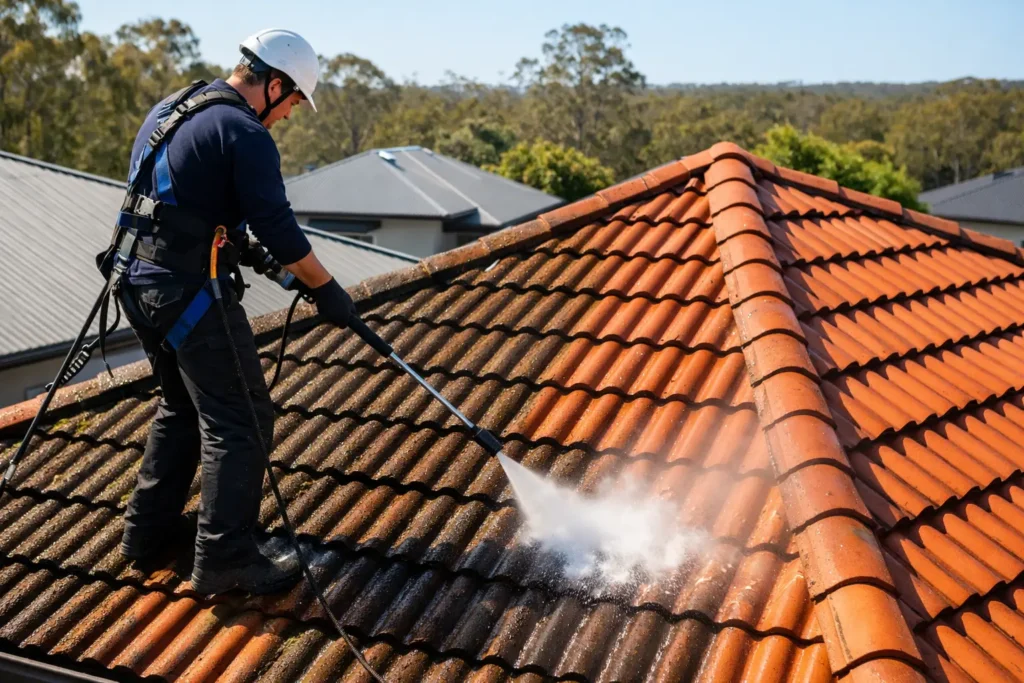
A dirty roof can make an otherwise well-kept home look tired, but cleaning it is not simply a matter of pointing a pressure washer at the tiles. Is roof pressure cleaning safe? It can be, provided the roof is inspected first and cleaned with the right pressure, equipment and technique. Done carelessly, it can expose existing issues or cause damage that costs far more than the clean-up.
For Sydney homeowners, moss, lichen, dirt and leaf build-up are common problems, particularly on older tiled roofs and properties surrounded by trees. A proper roof clean can dramatically improve street appeal, help gutters work properly and prepare a roof for painting or restoration. The key is making sure the roof is suitable for pressure cleaning before work begins.
Is Roof Pressure Cleaning Safe? It Depends on the Roof
Pressure cleaning is not automatically harmful, and it is not automatically safe either. The condition of the roof matters more than the fact that pressure is being used.
A sound cement tile roof with secure ridge caps, intact pointing and no cracked tiles can usually be cleaned safely by an experienced roofing contractor. The job requires controlled water pressure, the correct washing angle and careful movement across the roof. The goal is to remove surface grime and organic growth without driving water where it does not belong or disturbing materials that are already loose.
Problems arise when a roof is cleaned without checking its condition. High pressure can dislodge poorly bonded pointing, expose cracked tiles, force water beneath overlapping tiles or lift old paint that has already failed. This does not mean the cleaning caused every issue. In many cases, it reveals faults that were already there. But a professional should identify those risks before starting, not after water has entered the roof space.
A roof inspection is the difference between a useful maintenance job and a risky one. Before cleaning, the roofer should look for broken or slipped tiles, worn bedding and pointing, damaged valleys, loose ridge caps, blocked gutters and signs of previous leaks.
What Can Go Wrong With Poor Roof Washing?
The biggest concern is uncontrolled pressure. Domestic pressure washers are powerful, but they are not a substitute for roofing experience. A homeowner may not know how much pressure their roof can handle, where water can be forced under the tiles, or whether a section of pointing is ready to fail.
On tiled roofs, washing directly upwards into tile overlaps can push water beneath the tiles and into the roof cavity. Cleaning too close to the surface can also damage the tile face or remove loose coating. Walking in the wrong areas is another risk, especially on ageing tiles that may crack under foot.
Roof cleaning also creates a large volume of dirty water, moss and debris. If gutters and downpipes are not cleared and managed during the job, material can build up in the drainage system. That can lead to overflowing gutters in the next heavy downpour, which defeats the purpose of cleaning the roof in the first place.
There is also the safety issue for the person doing the work. Wet roofs are slippery, roof edges are unforgiving and working around steep sections requires proper access and safe work practices. Saving a little money on a DIY clean is rarely worthwhile if it creates a fall risk or turns a minor roof issue into a leak.
Roof Types Need Different Treatment
Not every roof should be treated the same way. The safest approach depends on the material, age, condition and whether the roof has been painted or restored previously.
Cement Tile Roofs
Cement tiles are commonly pressure cleaned as part of a roof restoration. When the tiles are sound, the ridge caps are secure and the pointing is in good condition, a controlled high-pressure wash can remove years of grime, mould and lichen effectively.
However, old cement tiles may be more porous or brittle. Cracked tiles should be replaced before washing, and loose bedding or pointing should be repaired rather than blasted with water. If the roof is due for painting, proper preparation after cleaning is just as important as the wash itself.
Terracotta Tile Roofs
Terracotta tiles can last for decades, but they still need careful handling. Their glazed or aged surface should not be aggressively stripped, and individual tiles may be more fragile than they appear from the ground. A close inspection is needed to identify cracked tiles, worn mortar and areas that cannot safely take strong pressure.
Terracotta roofs often collect moss and lichen in sheltered areas. Removing this growth improves appearance and helps water run off as intended, but the method needs to suit the specific roof rather than being treated as a standard wash-down.
Metal Roofs
Metal roofs can also benefit from cleaning, especially where dirt, leaves and organic growth hold moisture against the surface. The concern with metal is protecting the finish, avoiding damage around fixings and making sure water is not pushed into vulnerable laps or flashing details.
A roof with surface rust, failing paint or loose sheets needs repairs addressed first. Cleaning can improve the appearance, but it is not a fix for corrosion or damaged roof components.
Why Roof Repairs Should Come Before Cleaning
A clean roof is easier to inspect, but obvious repair issues should not be ignored until after the wash. Broken tiles, cracked ridge caps, loose pointing and damaged valley sections need attention first. Otherwise, pressure cleaning may worsen a fault that was already allowing water into the roof.
This is where experienced roofing knowledge matters. A contractor who only cleans may see a dirty roof. A roofer sees the condition of the tiles, the ridge capping, the valleys, the gutters and the areas most likely to leak.
At DJ Roofing & Restoration, roof cleaning is treated as part of the bigger picture. If a roof needs tile repairs, re-bedding, repointing or valley work, it makes sense to deal with those items before investing in a clean or a fresh coat of roof paint. It gives the finished job a better result and helps protect the home properly.
Signs Your Roof May Not Be Ready for Pressure Cleaning
You do not need to climb onto the roof to spot every problem, but a few warning signs should prompt an inspection before booking a clean. Water stains on ceilings, visible broken tiles, sagging gutter sections, loose material around ridge caps and debris spilling from valleys all point to maintenance that should be addressed.
An older roof that has not been inspected in years also deserves a closer look. A layer of dirt can hide cracked tiles and deteriorated pointing. Once the roof is cleaned, those issues become more visible, which is useful, but they should be allowed for in the work plan.
If the roof has recently leaked, cleaning should wait until the source of the leak has been found and repaired. A wash will not solve a water-entry problem, and adding more water to a compromised roof is not sensible.
What a Professional Roof Clean Should Include
A proper job is more than a quick spray from the edge of the roof. It starts with checking the roof condition and planning safe access. The cleaner should use equipment suited to the surface, work methodically to avoid forcing water under tiles, and keep an eye on areas such as ridges, valleys, flashings and roof penetrations.
Gutters should be cleared as part of the process, particularly when moss, lichen and roof debris are being washed down. Once the roof is clean, it is easier to identify repairs, assess whether painting is worthwhile and see the real condition of the roof surface.
Ask the contractor what they have found before work starts. Straight answers about cracked tiles, deteriorated pointing or blocked valleys are a good sign. So is a clear quote that separates essential repairs from optional cosmetic work.
The Safer Way to Improve a Tired Roof
Roof pressure cleaning is safe when it is carried out on the right roof, after a proper inspection, by someone who understands roofing rather than just pressure washing. It can be one of the most effective ways to lift the appearance of your home and keep roof drainage clear, but it should never be a rushed job.
If your roof is dirty, stained or covered in moss, start with an honest condition check. Fix what needs fixing, clean what can be safely cleaned, and you will get a result that looks better now and protects your property for years to come.