
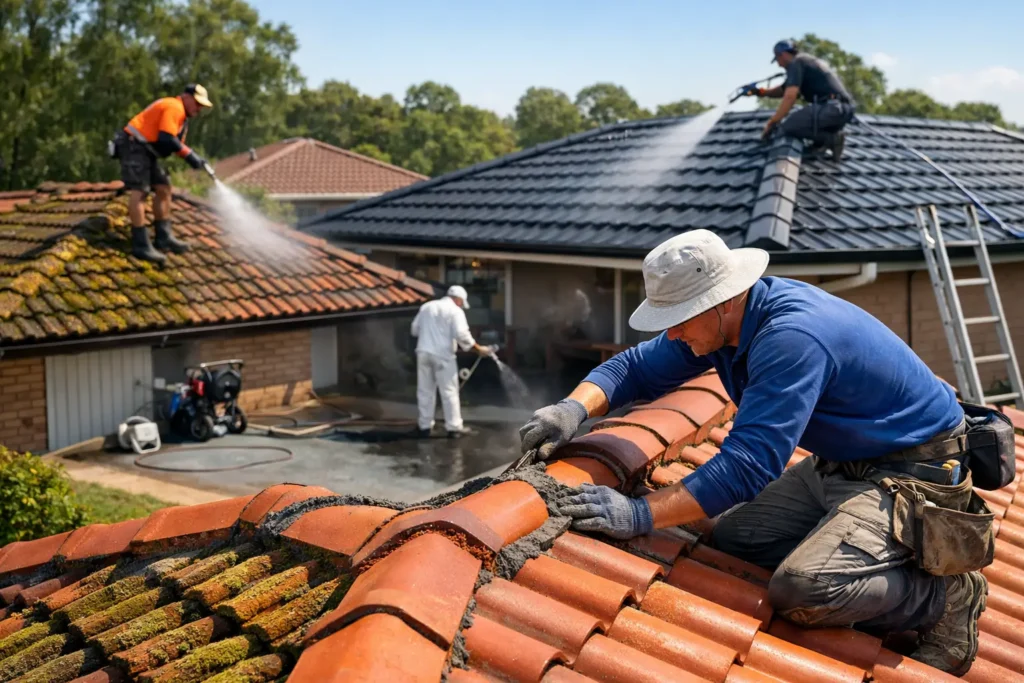
A ridge cap that has started to move is not just a cosmetic problem. It can let water into the roof space, loosen nearby tiles and create a bigger repair bill after the next run of heavy rain. Repointing roof ridge caps is one of the most effective ways to secure a tiled roof before small cracks and gaps turn into leaks.
For Sydney homeowners, this work is particularly worthwhile on older cement tile roofs exposed to strong sun, wind and seasonal downpours. The ridge line is the highest, most exposed part of the roof. When the pointing around it fails, the roof loses an important layer of protection.
What are roof ridge caps?
Ridge caps are the shaped tiles that run along the peak of a tiled roof. They cover the gap where two roof sections meet and help direct rainwater away from the roof structure. Similar caps are also used along hips, which are the sloping external joins between roof faces.
These tiles sit on a bedding material, traditionally mortar, and are finished with pointing. Pointing is the visible layer around the edge of the ridge cap that seals the joint and holds the tile firmly in place. Modern flexible pointing compounds are designed to move slightly with the roof through changing temperatures, helping them last better than old rigid mortar finishes.
When that pointing cracks, lifts or separates from the tile, water and wind can work their way underneath. That is when a simple maintenance job can become a leak repair.
Signs your ridge caps need attention
You do not need to climb onto the roof to spot every issue. A visual check from ground level, using binoculars if needed, can reveal obvious damage. Loose pieces of mortar in gutters or on the ground are another warning sign that the ridge capping may be deteriorating.
Look out for cracked, missing or crumbling pointing along the ridge line. Gaps between caps, caps that appear crooked, and mortar that looks washed out or chalky should also be checked. Inside the home, water marks on ceilings near the roof peak, damp insulation or a musty smell in the roof space may point to a roof leak, although the source still needs a proper inspection.
Not every cracked line means the whole roof needs restoration. Sometimes the problem is limited to a small section of ridge capping. Other times, widespread failed pointing is a sign that the roof needs re-bedding and repointing across the ridge and hips. A hands-on inspection is the only sensible way to tell the difference.
Repointing roof ridge caps versus re-bedding
These terms are often used together, but they are not the same job.
Repointing means removing failed pointing material and applying a new flexible pointing compound around ridge caps that are still properly bedded and stable. It is suitable where the caps are secure but the outer seal has cracked, lifted or worn away.
Re-bedding is needed when the mortar underneath the ridge caps has failed or the caps themselves are loose. The roofer lifts the affected caps, removes the old bedding, resets them on fresh mortar and then applies new pointing once the bedding is ready. Re-bedding takes more labour, but it is the right repair when the structure underneath has given way.
Putting new pointing over loose ridge caps is a shortcut, not a repair. It may look better for a short time, but movement underneath will crack the new finish and leave the roof exposed again. Good workmanship starts with checking that every cap is firm before the pointing goes on.
What a proper ridge cap repair involves
A quality repair begins with an inspection of the ridge caps, hip caps, surrounding tiles, valleys and roof penetrations. This matters because water can travel before it becomes visible inside. The leak may not be directly above the ceiling stain.
Where repointing is appropriate, the old loose or damaged pointing is removed. The roof surface is cleaned around the joint so the new material can bond correctly. Any cracked or broken tiles in the repair area should be replaced rather than covered over.
If caps are loose, the affected sections are re-bedded first. Once secure, a flexible pointing compound is applied in a consistent bead around the tile edges. The finish should be neat, well bonded and free of gaps, but appearance is not the only measure. The important part is that the capping is stable and sealed against wind-driven rain.
The job should also include a final check of the repaired areas and safe clean-up of debris. Mortar pieces left in gutters can contribute to blockages, particularly when leaves build up after a storm.
Why ridge pointing fails on Sydney roofs
Age is the most common reason. Older mortar becomes brittle over time and cannot cope with normal expansion and contraction. Sydney roofs also deal with hot summer days, cooler nights, heavy rain, salt air in some suburbs and gusty weather. All of that movement and exposure can gradually break down rigid materials.
Previous poor repairs are another common cause. If the original bedding was weak, ridge caps were not reset properly, or unsuitable materials were used, failure can happen much sooner. Painting over cracked pointing does not fix it either. Roof paint can improve the look of a roof, but it is not a substitute for securing loose caps and sealing open joints.
Blocked gutters and poor drainage can add to roof problems, though they do not directly cause ridge pointing to crack. When rainwater backs up or overflows, it increases the chance of water finding weak points around tiles, valleys and flashings. Keeping gutters clear is a sensible part of protecting the repair work.
Is repointing worth it before a roof restoration?
Usually, yes. Repointing is often an essential stage of a full roof restoration because there is little value in cleaning and painting a roof with loose ridge caps or failed mortar. Repairs need to come first.
For a roof that is otherwise in good condition, targeted re-bedding and repointing can be a cost-effective standalone job. It can improve weather protection, reduce the risk of tile movement and make the ridge line look far tidier. If tiles are badly cracked throughout, valleys are rusted, or multiple areas are leaking, a broader repair plan may offer better value than piecemeal work.
Terracotta roofs need particular care. Their tiles can be more fragile, and repairs should be matched to the condition of the roof rather than treated like a standard cement tile job. An experienced roofer will assess what can be repaired safely and what needs replacement.
Why this is not a DIY job
Working at roof height carries obvious risks, especially when tiles are wet, aged or brittle. There is also a technical side to the work. Walking in the wrong place can crack tiles, and poor preparation or the wrong pointing product can lead to early failure.
A professional roofer can identify whether the issue is only pointing or whether re-bedding, tile replacement or another repair is needed. That prevents homeowners from spending money on a surface fix while the real problem remains underneath.
DJ Roofing & Restoration provides practical inspections and clear recommendations for homeowners who want to repair a leaking or ageing tiled roof without being pushed into unnecessary work. The aim is simple: fix what needs fixing, explain the options and leave the roof secure.
If you can see cracked pointing, loose ridge caps or signs of water getting in, do not wait for the damage to spread. A timely inspection can turn a manageable ridge repair into one less thing to worry about when the weather turns.