
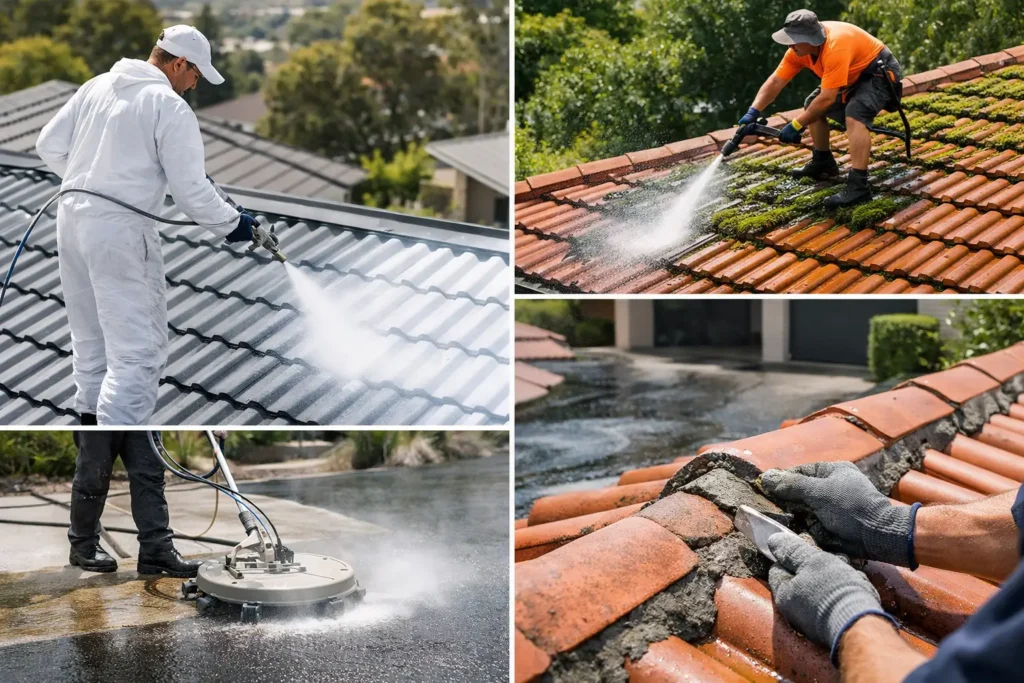
A roof leak rarely starts as a dramatic ceiling collapse. More often, it begins with a loose tile, failed pointing, rusted valley or blocked gutter that lets water work its way in during heavy rain. The best ways to waterproof roofs are not about applying one magic product over everything. They involve finding where water is getting through, fixing the roof structure properly, then protecting the surface so it stands up to Sydney’s wet weather, heat and salt air.
For most homeowners in Sydney, timely roof maintenance costs far less than repairing damaged insulation, ceilings, timber framing and paintwork later. The right solution depends on your roof material, its age and the condition of its existing repairs.
Roof waterproofing starts with a proper roof inspection
Water does not always enter directly above the stain you can see inside. It can travel along rafters, sarking or roof battens before appearing on a ceiling several metres away. That is why a proper inspection needs to cover more than the obvious cracked tile.
A roofer in Sydney should check the condition of tiles or sheets, ridge caps, bedding and pointing, valleys, flashing around chimneys and skylights, roof penetrations, gutters and downpipes. They should also look for signs of water pooling, rust, loose fixings and debris collecting in problem areas.
This step matters because waterproofing a roof without repairing the actual entry point can waste money. For example, a fresh coat of roof paint may improve the appearance of old tiles, but it will not stop a leak caused by a split valley or failed flashing. Good roof waterproofing starts with the repair work that keeps water outside the roof space.
Repair cracked tiles, sheets and damaged flashings
Broken or slipped roof tiles are one of the most common causes of roof leaks. A cracked tile can look minor from the ground, yet enough water can get beneath it during wind-driven rain to damage the roof cavity. Replacing damaged tiles, securing loose ones and checking surrounding tiles is a simple but essential first line of defence.
Metal roofs need the same attention in different areas. Rust spots, loose screws, worn rubber washers and lifted sheet edges can all become leak points. Small rust areas may be treated if caught early, but badly corroded sheets or flashings usually need replacement. Painting over advanced rust only hides the issue for a while.
Flashing deserves close attention too. These metal sections direct water away from roof junctions, including chimneys, walls, skylights and vents. When flashing lifts, cracks or loses its seal, water can enter where different materials meet. Re-securing or replacing it is often far more effective for weatherproofing roof than applying sealant over the top and hoping for the best.
Re-bed and repoint ridge caps properly for effective roof waterproofing
On tiled roofs, ridge caps run along the high points and hips. They are traditionally held in place with bedding mortar and finished with flexible pointing. Over time, mortar can crack, pointing can break away, and ridge caps can move. This leaves gaps that allow rain to get underneath.
Re-bedding and repointing are the best ways to waterproof tiled roofs when the ridge work is failing. The team removes loose ridge caps, cleans away the failed material, applies new bedding where needed, and uses flexible pointing to create a weather-resistant finish.
The flexible finish is important. Roofs expand and contract through hot days, cool nights and changing seasons. Rigid repairs are more likely to crack again. A quality repointing job should be neat, properly bonded and suited to the roof’s movement.
If only a few sections have failed, targeted repairs may be enough. When pointing is brittle or broken across much of the roof, a broader restoration is usually better value than patching one area after another.
Keep gutters and valleys clear
A roof cannot shed water properly if gutters and valleys are full of leaves, dirt and roof debris. Water backs up, overflows into eaves and can be driven under tiles or flashings. In established Sydney areas, such as the City of Liverpool, overhanging trees can fill gutters quickly, especially after storms.
Roof valleys are particularly important. They carry a large amount of rainwater down the roof, and they are prone to corrosion on older tiled roofs. A rusty, split, or poorly repaired valley can cause persistent leaks that are difficult to spot from the ground. Valley replacement by a local roofing company in Liverpool is often the right call when the metal has deteriorated rather than trying to seal over thin, rusted steel.
Regular gutter cleaning is straightforward preventative maintenance. It also gives you a chance to identify loose brackets, overflowing downpipes and areas where water is not draining as it should. If water repeatedly spills over a gutter during normal rain, the cause needs to be addressed, whether it is a blockage, poor fall or insufficient drainage capacity.
Use roof coatings for the right job
Roof coatings can add a valuable layer of protection, but they work best on a roof that has already been repaired and prepared correctly. A professional roof clean removes built-up dirt, moss, lichen and loose material that can stop coatings from adhering. Repairs come next, followed by the appropriate primer and roof membrane or paint system.
For cement tile and metal roofs, a quality coating can help seal the surface, refresh faded colour and reduce the effects of harsh sun and rain. It can also make a tired roof look significantly better without the cost of a full replacement. The trade-off is preparation. Skipping cleaning, priming or repairs may leave you with peeling paint and the same leak problems underneath.
Terracotta tiles need a different approach. Their natural finish and water-shedding properties mean coating is not always necessary or suitable. The priority is generally replacing damaged tiles, repairing ridge work, clearing valleys and checking flashings. A roof inspection will show whether a coating is worthwhile or whether practical repair work will deliver a better result.
Treat sealants as a repair tool, not a shortcut
Roof sealants have a place around flashings, pipe penetrations, small gaps and specific repair points. Used correctly, they help reinforce vulnerable areas and create a watertight finish. Used as a blanket fix across a failing roof, they rarely last.
Cheap patch jobs often involve excessive silicone or bitumen slapped over cracks, valleys or tiles. These materials can trap water, break down in the sun and make future repairs harder. They may stop a drip temporarily, but they do not replace sound flashing, proper pointing or new valley metal where those items have failed.
The better approach is to identify the cause, repair the component, then use compatible sealant only where it is needed. It is cleaner, more reliable and usually more cost-effective over the life of the roof.
Improve ventilation and manage roof moisture
Not every moisture problem is caused by rain getting through the roof. Condensation can build up inside roof spaces when warm, humid air has nowhere to escape. This is more noticeable in poorly ventilated homes and can lead to mould, damp insulation and staining that looks similar to a roof leak.
Whirlybirds and other roof ventilation options can improve airflow in suitable homes. They are not a fix for a broken tile or leaking valley, but they can help reduce trapped heat and moisture in the roof cavity. A roofer should first determine whether you are dealing with rainwater entry, condensation or a combination of both.
Know when repairs are enough and when restoration makes sense
A few cracked tiles, isolated pointing damage or a small flashing issue can often be repaired quickly. If the roof has widespread faded coatings, deteriorated pointing, multiple broken tiles, blocked valleys and recurring leaks, a full roof restoration may be the more sensible long-term option.
Restoration typically combines cleaning, repair work, ridge cap repairs and protective coating where appropriate. It is not the same as replacement, and it will not solve structural issues in a roof that has reached the end of its life. But for many ageing roofs with sound overall structure, it can extend service life, improve street appeal and reduce the chance of water damage.
Avoid waiting until the next major storm to find out whether a small roof issue has become a larger one. If you have water stains, overflowing gutters, loose ridge caps or visible roof damage, arrange an inspection while the repair is still manageable. DJ Roofing & Restoration can assess the condition of your roof and provide straightforward advice on the work that will actually protect your home.
Frequently Asked Questions:
How much does roof waterproofing cost in Sydney?
In Sydney the cost of roof waterproofing is usually between $100 and $160+ per square metre, the total cost of the project for a typical residential property generally lying between $1,700 and $5,500 or more depending on the size, condition, accessibility, materials and required repairs.
Your final quote depends on:
- Basic torch-on bituminous systems are less expensive (ranging from $55 to $95 per square metre), whereas premium liquid polyurethane or roof deck membranes are more costly (ranging from $140 to $330 per square metre).
- The Inner West and the Eastern Suburbs have premium rates because of the existing heritage preparations, the need to protect buildings from the coastal weather, and the narrow access onto the streets.
- With regard to logistics, high-density CBD apartments have to pay additional fees due to strata rules, parking limitations, and the need to lift moving materials up several floors.
How long does roof waterproofing last?
In Sydney the average lifespan of roof waterproofing is between 10 and 20 years, but the particular environmental conditions in different geographic areas have a significant effect on how long this lasts.
Those houses in the Eastern Suburbs and the Northern Beaches have to cope with more severe coastal conditions, in which constant salt spray, high humidity and heavy rain driven by strong winds can speed up the deterioration of lower-quality membranes, so that marine-grade or UV-stable liquid polyurethanes are necessary if the waterproofing is to last. On the other hand, in the Greater Western Sydney and Hills District areas there are extreme changes in temperature—there being frequent heatwaves in summer which are then followed by rapid cooling at night—thus subjecting the roofs to strong cycles of thermal expansion and contraction that can cause brittle materials such as acrylics to crack prematurely.
Apart from the stresses caused by the regional climate, the final lifespan of a membrane in all areas is greatly influenced by the quality of the work carried out when preparing the substrate, by whether ponding water is present because of an inadequate drainage slope, and by whether the roof suffers mechanical wear as a result of foot traffic or movement of the building structure.
Does my roof need waterproofing, and what are the signs?
If you know when your roof requires waterproofing, this can stop serious structural damage to your house. The signs usually appear in two locations: inside the living areas and on the roof surface itself. Inside the House (Internal Signs).
- Paint stains and discoloration: Brown, yellow, or grey spots spreading over the ceilings or the upper walls.
- Paint that is peeling or bubbling: Moisture getting trapped behind the drywall or plaster causing the paint to lift and flake off.
- A musty smell and mould: A continuous damp smell, or visible black and green mould patches growing in the upper corners, on the ceilings, or inside built-in wardrobes.
- Dripping water or sagging plaster: Water dripping actively during rainstorms, or a ceiling that appears heavy, bowed, and wet.