
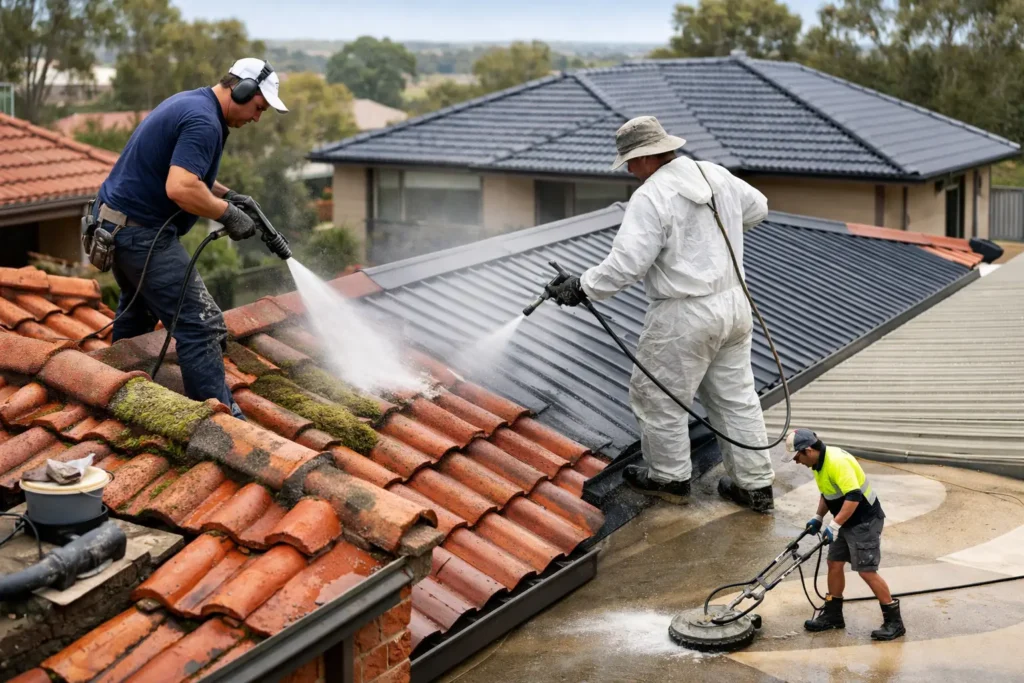
A roof can look tired long before it is ready to be replaced. Built-up dirt, moss, lichen, leaf litter and pollution can leave tiles looking dark and neglected, while blocked valleys and gutters may hold water where it should be draining away. High pressure roof cleaning can make a major difference, but only when the roof is checked first and the work is carried out properly.
For Sydney homeowners, the right clean is not just about making the property look better from the street. It is a chance to identify broken tiles, loose ridge capping, deteriorated pointing and drainage problems before they become an expensive leak.
What High Pressure Roof Cleaning Does
High pressure roof cleaning uses specialised equipment to remove surface grime, moss, lichen, loose dirt and debris from roof tiles, metal roofing, valleys and other accessible roof areas. A professional clean can bring back the original appearance of a weathered roof and prepare it for repairs, repointing, sealing or painting.
The visible result is usually immediate. Cleaner tiles can lift the whole appearance of a home, especially where dark staining has built up over years. For owners preparing to sell, landlords maintaining a property or families who simply want to look after their home, that improvement matters.
There is also a practical benefit. Moss, leaf litter and dirt can collect in roof valleys, around flashing and near gutters. When rain cannot move freely off the roof, water can back up into areas it should not reach. Cleaning those areas helps the roof drainage system do its job.
That said, pressure washing is not a one-size-fits-all service. The roof material, its age, existing damage and the condition of the mortar all need to be considered before a machine is started.
The Roof Must Be Inspected Before It Is Cleaned
A good roof clean starts with an inspection, not a pressure washer. Old or cracked tiles can break under foot. Loose ridge caps and worn pointing may need attention first. Damaged valley iron, split flashing or existing leaks should not be hidden behind a cosmetic clean.
On a cement tile roof, cleaning may expose areas where the old surface coating has worn away. That is not necessarily a problem. It can show the true condition of the roof and help determine whether repairs and a fresh roof paint system are worthwhile.
Terracotta tiles need particularly careful handling. They can be durable, but older tiles may be brittle, and the wrong technique can cause unnecessary damage. Metal roofs also require a different approach to tiled roofs, with attention paid to fixings, overlaps, flashings and the direction of water flow.
A professional contractor will also protect surrounding areas. Wash-down water, moss and loose debris need to be managed so they do not end up blocking gutters, staining walls or making paths slippery. Care around solar panels, skylights, antenna mounts and nearby gardens is part of doing the job properly.
When Pressure Cleaning Is a Good Option
High pressure cleaning for roofs is often a good fit when a roof is structurally sound but looks stained, dirty or heavily affected by organic growth. It is commonly carried out before roof painting because paint needs a clean, properly prepared surface to achieve a neat finish and better adhesion.
It may also be suitable when gutters and valleys are full of debris, provided they are cleared and checked as part of the job. A clean roof surface makes it easier to spot minor faults that were previously hidden under dirt and moss.
For many homeowners, cleaning forms part of a more sensible restoration plan: repair damaged tiles, replace worn valleys where needed, secure ridge capping, clean the roof, then paint or seal it if the condition and budget justify it. This can extend the useful life of an existing roof for far less than a full replacement.
The best option depends on what the inspection finds. If the roof has widespread cracked tiles, failing bedding, serious leaks or heavily corroded metalwork, repairs should take priority. Cleaning alone will not solve a roof that is letting water into the home.
When High Pressure May Not Be the Best Approach
Not every roof should receive the same level of pressure. Very old, fragile tiles, roofs with extensive damage or areas with loose mortar may require a gentler method or repair work before cleaning. Using excessive pressure in the wrong place can dislodge mortar, damage coatings, force water under tiles or create more problems than it solves.
This is why DIY roof washing can be a costly gamble. Apart from the risk of falls, household pressure washers are difficult to control on a sloped roof. They can strip surfaces unevenly, blast water into vulnerable areas and leave you with a roof that looks worse after the first heavy storm.
A professional will assess water pressure, nozzle type, working distance and cleaning direction for the roof in front of them. The goal is to remove contamination without treating every roof like a driveway.
If the roof has delicate sections or a paint system that is near the end of its life, the better outcome may be targeted cleaning followed by restoration work. Straight advice is more valuable than a quick clean that does not suit the roof.
Cleaning, Repairs and Painting Work Better Together
Roof cleaning is most effective when it is part of proper roof maintenance. Once grime and moss are removed, small defects are easier to see and fix. This may include replacing cracked or broken tiles, attending to ridge capping, clearing gutters, repairing valleys or addressing a minor leak before it causes internal damage.
For faded cement tile roofs, a clean and repaint can provide a substantial visual improvement. The roof is prepared, repairs are completed, and a suitable coating system is applied to give the home a cleaner, more finished appearance. The value is not just cosmetic. A well-maintained roof protects the structure below it and helps avoid putting off small repairs until they become major ones.
Gutter cleaning should also be considered at the same time. There is little point cleaning the roof surface if gutters are packed with leaves and downpipes cannot carry water away. After the clean, gutters and valleys should be checked for loose debris so the entire drainage path is clear.
How Often Should a Roof Be Cleaned?
There is no fixed schedule that suits every Sydney home. Properties under large trees, close to bushland or in damp, shaded locations usually collect leaf litter and moss faster than open, sunny properties. Coastal exposure, traffic pollution and the roof pitch can also affect how quickly dirt builds up.
As a general rule, it is worth having the roof and gutters inspected when you notice dark growth, overflowing gutters, staining on external walls or debris collecting in valleys. A visual check from the ground is useful, but it does not replace a closer inspection by someone who knows what to look for.
Regular maintenance is usually cheaper and less disruptive than waiting for a ceiling stain to appear. By the time water is visible inside, the source may have been working away for some time.
Choose a Contractor Who Treats the Roof as a Roof
The cheapest pressure washing quote is not always the best value. Ask whether the roof will be inspected before cleaning, how damaged tiles or loose capping will be handled, whether gutters and valleys are included, and what measures are taken to protect the property. You want a roofing contractor who understands cleaning as part of roof care, not just surface washing.
DJ Roofing & Restoration provides practical roof cleaning and restoration advice based on the condition of the roof, not a one-size-fits-all sales pitch. If your roof is looking stained, neglected or overdue for maintenance, arrange an inspection and get a clear quote for the work that will genuinely help protect it.