
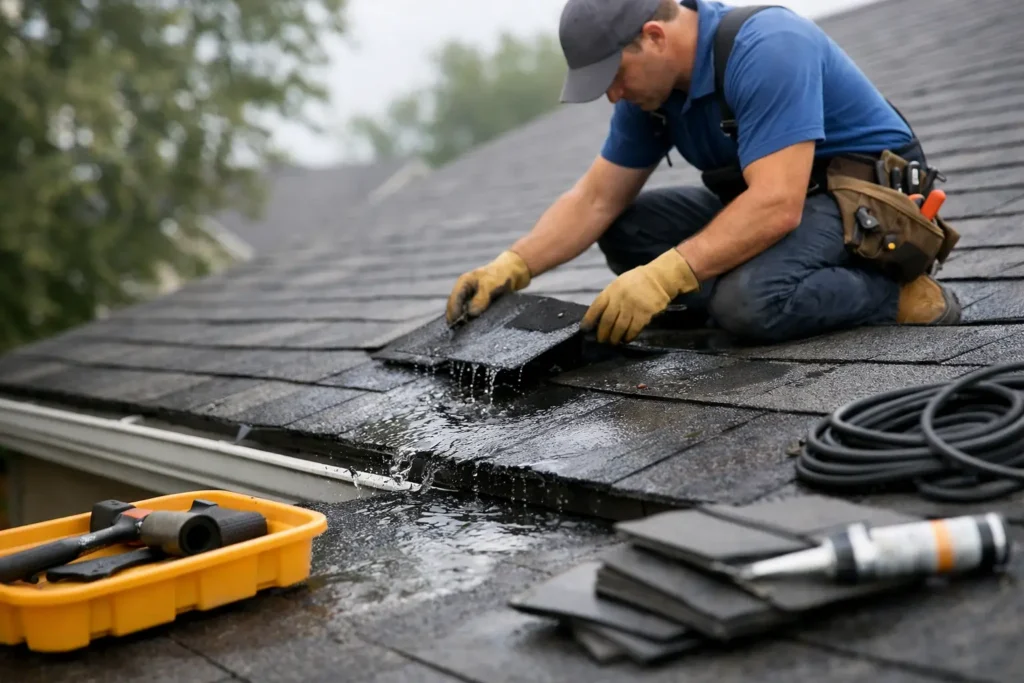
A roof leak usually starts small – a ceiling stain, a damp patch near the cornice, a drip during heavy rain. Then the repair bill grows because water rarely stays where it first gets in. If you are asking how much does it cost to repair leaking roof problems, the honest answer is that it depends on the cause, the roof type, and how far the damage has spread.
For Sydney homeowners, most leaking roof repairs fall somewhere between a few hundred dollars for a minor fix and a few thousand for more involved work. The key is getting the leak properly diagnosed early. A cheap patch on the wrong area can waste money fast, while the right repair can save you from ceiling damage, mould, rotten battens, and a much larger restoration bill later.
How much does it cost to repair leaking roof issues in Sydney?
As a general guide, a simple leaking roof repair might cost around $250 to $600 when the issue is isolated and easy to access. That could include replacing a few cracked tiles, resealing a small flashing section, or clearing a blockage that is forcing water back under the roof line.
A more typical repair job often lands in the $600 to $1,500 range. This is where the leak is real but still repairable without major structural work. Think broken ridge capping, failed pointing, damaged valleys, several cracked tiles, rusted screws on a metal roof, or multiple entry points caused by age and weather.
Once you are dealing with widespread deterioration, hard-to-find leaks, water damage beneath the surface, or multiple roof components needing attention, costs can push beyond $1,500 and sometimes into the $3,000 to $5,000 range. At that point, the repair may involve valley replacement, extensive re-bedding and repointing, sections of roof restoration, or replacement of damaged timbers and underlay.
That range is broad because leaking roofs are not one-size-fits-all. Two homes can have the same ceiling stain and completely different repair scopes.
What actually affects the repair price?
The biggest factor is the source of the leak. A few broken concrete tiles are a much simpler job than a rusted valley or failed flashing around a chimney, skylight, or wall junction. Leaks around penetrations and valleys often take more labour because the water can travel before it becomes visible inside.
Roof type matters too. Tiled roofs, metal roofs, terracotta roofs, and older roofs all come with different materials, access issues, and repair methods. Terracotta tiles, for example, need a careful hand. Metal roofs may need screw replacement, lap sealing, or rust treatment. Older roofs can surprise you with brittle materials and hidden damage.
Access is another big one. A single-storey house with a straightforward pitch is faster and safer to work on than a steep double-storey roof with limited access around the property. If extra safety setup or more labour is needed, the quote will reflect that.
Then there is the extent of water damage. The leak itself might be easy to fix, but if water has already damaged insulation, plaster, fascia, or roof battens, the total repair cost climbs. That is why early action nearly always saves money.
Common leaking roof repairs and rough cost ranges
Some roof leaks are caused by obvious breakages. Others are caused by wear over time. In Sydney homes, a lot of repair work comes back to a handful of common issues.
Replacing a small number of cracked or slipped roof tiles is usually one of the lower-cost repairs, provided matching tiles are available and the leak has not caused bigger problems underneath. Re-bedding and repointing ridge capping can sit in the mid-range because it is labour-based and often needed across more than one section, not just one visible crack.
Valley repairs tend to cost more because roof valleys cop the flow of a lot of rainwater and are a common failure point on older roofs. If the valley iron is rusted, blocked, or installed poorly, the repair needs to be done properly or the leak will keep returning.
Flashing repairs also vary. A small reseal might be affordable, but replacing flashing around chimneys, walls, skylights, or vents takes more time and skill. On metal roofs, replacing worn screws and sealing penetrations can be relatively straightforward if caught early. If rust has spread through sheets or fixings, it becomes a bigger job.
Blocked gutters and downpipes can also cause what looks like a roof leak. Overflowing water can back up under tiles or into fascia areas during heavy rain. In those cases, gutter cleaning and minor roof work may solve the issue without major expense.
Why some quotes are much cheaper than others
If one quote is far lower than the rest, there is usually a reason. Sometimes it is because the contractor is quoting for a patch, not a full repair. Sometimes the source of the leak has not been properly identified at all.
Leaking roofs can be deceptive. Water enters in one spot and appears in another. A quick silicone fix might stop the symptom for a few weeks, but if the real problem is a failed valley, broken pointing, or widespread cracked tiles, the leak will come back. Then you pay twice.
A proper quote should be based on inspection, roof condition, access, and the actual cause of the leak. Good repair work is not just about stopping the drip today. It is about fixing the entry point so the problem stays fixed.
Repair or restore?
This is where a lot of homeowners get stuck. If the roof is generally in decent condition and the problem is localised, repair is usually the smart option. It costs less upfront and can add years to the life of the roof.
But if the roof has multiple leaks, brittle mortar, damaged valleys, dirty surfaces, loose tiles, and signs of ongoing wear, a broader restoration can be better value than chasing one repair after another. Restoration does not mean full replacement. It means addressing the roof as a system – repairs, cleaning, re-bedding, repointing, sealing, and coating where needed.
That approach often makes sense for older Sydney roofs that still have solid structure but need more than a band-aid. If you keep paying for isolated fixes on a roof that is tired across the board, the long-term cost can end up higher.
When should you act straight away?
If water is actively dripping inside, if the ceiling is sagging, or if the leak appears around lights or electrical fittings, do not wait. Those are urgent problems. Even if the rain stops, trapped moisture can keep damaging plaster, timber, insulation, and internal paintwork.
You should also move quickly if you notice mould smells in the roof space, overflowing gutters during storms, or repeated leaks in the same area. A recurring leak usually means the original cause was missed or only partly repaired.
The longer a leak sits, the less likely it stays a simple repair. What could have been a few hundred dollars can turn into internal repairs, repainting, and structural work.
Getting value for money from a leaking roof repair
The best value is not always the cheapest figure on paper. It is the repair that actually solves the problem and helps you avoid more damage. That means looking for clear advice, a proper inspection, insured workmanship, and someone who understands Sydney roof types and local weather conditions.
It also helps to deal with a contractor who can spot related issues at the same time. A leak might be linked to blocked gutters, failing pointing, dirty roof surfaces hiding cracks, or a valley that is close to giving out. Fixing those issues early can save you another call-out later.
For homeowners who want practical advice and no run-around, that is where local experience matters. Companies like DJ Roofing & Restoration work on the kinds of tiled and metal roofs seen across Sydney every day, so the recommendations are based on what actually lasts, not guesswork.
So, what should you budget for?
If you want a realistic starting point, budget a few hundred dollars for a minor leaking roof repair and be prepared for more if the issue involves valleys, flashing, widespread tile damage, or hidden water damage. The only way to know the real cost is to have the leak inspected properly before the next heavy rain does more harm.
A leaking roof rarely fixes itself, and it rarely stays the same price for long. If you have noticed water marks, drips, or signs your roof is not handling the weather the way it should, getting it checked now is usually the cheapest move you can make.