
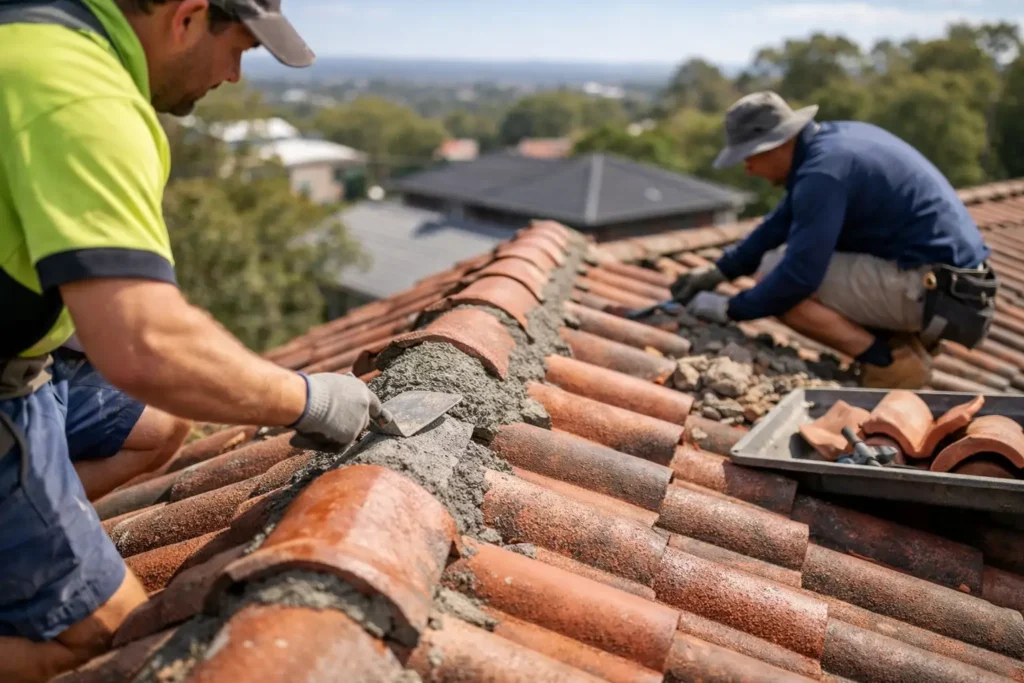
A loose ridge cap can turn into a costly leak long before water appears on the ceiling. On tiled roofs, the ridge capping is one of the areas most exposed to sun, wind and rain. Re-bedding and repointing a roof restores the mortar that holds these tiles in place and seals the joints that protect your home from water entry.
For Sydney homeowners, this is often one of the most worthwhile roof repairs to arrange before a small issue spreads. It can improve the look of an ageing roof, stop ridge caps moving and help avoid damage to roof timbers, insulation and internal ceilings. The key is having the roof assessed properly so the work matches its condition.
What re-bedding and repointing a roof actually means
Ridge caps are the shaped tiles installed along the peaks, hips and edges of a tiled roof. They are traditionally secured with a mortar bed underneath, then finished with flexible pointing compound along the visible edges. Both materials do different jobs, and both need to be in good order.
Re-bedding means removing loose or failed ridge caps, clearing away old damaged bedding mortar and resetting the caps on fresh mortar. This gives the ridge capping a stable, level base again. If ridge tiles are cracked or badly weathered, they may need to be replaced as part of the repair.
Repointing is the application of flexible pointing compound over the bedding mortar at the joints and edges. Modern flexible pointing is designed to move slightly with normal roof movement and temperature changes. It creates a clean finished line while helping keep water out of the vulnerable gaps around the ridge caps.
A roof does not always need both jobs. If the bedding underneath is solid and the caps are secure, repointing alone may be enough. But if the mortar is crumbling, ridge caps are rocking or sections have dropped out, simply applying new pointing over the top is not a proper fix. The failed bedding needs attention first.
Signs your roof may need re-bedding and repointing
You can often spot early signs from the ground, although a close inspection is the safest way to confirm what is going on. Look for missing chunks of mortar along the ridge, hip or gable tiles. Cracked, lifting or peeling pointing is another common warning sign, particularly on older cement tile roofs.
Loose ridge caps are more urgent. Strong winds can shift them further, opening pathways for rain and potentially allowing tiles to dislodge. Water may then track under the tiles and into the roof cavity, where it can go unnoticed for some time.
Inside the home, brown ceiling marks, damp patches, mouldy smells or water appearing after heavy rain all deserve prompt attention. A leak near the top of the ceiling does not always mean the problem sits directly above it. Water can travel along roof battens or timbers before it becomes visible.
Other signs include mortar fragments in gutters, broken ridge caps, visible gaps at tile joints and a roof line that looks uneven. These issues can develop gradually, which is why regular roof checks are useful after major storms or when the roof is being cleaned or painted.
Why old mortar fails on Sydney tiled roofs
Roof mortar has a hard job. It sits in full sun, handles cold and heat changes, withstands heavy rain and copes with wind pressure year after year. Over time, traditional mortar becomes dry and brittle. It can crack, break away and lose its grip on the ridge caps.
Sydney’s weather puts extra pressure on exposed roof areas. Long hot periods can cause materials to expand, while sudden downpours test every crack and open joint. Coastal homes may also deal with salt-laden air, which can speed up general weathering. Trees overhanging the roof can add leaf build-up and moisture, particularly around valleys and ridges.
Previous poor-quality repairs are another reason problems return. A thin smear of mortar or pointing over loose caps might look acceptable from the street, but it will not hold up. Good roof work starts with preparation, secure bedding and the right materials, not a quick cosmetic cover-up.
What a proper roof repointing job involves
The first step is inspecting the ridge capping, surrounding roof tiles, valleys and any areas where water may be entering. This helps separate a repointing issue from other faults such as cracked tiles, damaged flashing or blocked gutters. Homeowners should be given clear advice about what needs repair now and what can be monitored.
Where re-bedding is required, the old failed mortar is removed and the ridge caps are carefully lifted. The roof surface is cleaned and prepared, then the caps are reset on new bedding mortar with proper alignment. This matters because poorly positioned ridge caps can leave uneven gaps and affect how the finished pointing performs.
Once the bedding has cured sufficiently, flexible pointing compound is applied to form a neat, weather-resistant seal. The compound should be worked into the joints, not just laid over the surface. A consistent finish improves the roof’s appearance, but the real value is in the secure seal and stable ridge capping underneath.
A thorough contractor will also check for broken tiles around the work area and remove loose debris from the roof. If the roof is due for cleaning or painting, re-bedding and repointing should generally be completed first. There is little sense painting over areas that still need structural roof repair.
Repointing alone or full re-bedding: which one do you need?
It depends on the condition of the existing bedding. Repointing alone is usually suitable where ridge caps remain firmly fixed and the underlying mortar is intact, but the exposed pointing has cracked, faded or begun to separate. This is a more targeted repair and can extend the life of otherwise sound ridge work.
Full re-bedding and repointing is the better option where mortar has failed, caps move under pressure, sections are missing or the ridge line is visibly deteriorating. It involves more labour, but it addresses the cause of the problem rather than covering it up. For an older roof with widespread ridge deterioration, doing the job properly is usually better value than arranging repeated patch repairs.
The same applies to roof restoration decisions. If the tiles are generally sound and the main issues are ridge capping, surface wear and faded colour, repairs combined with cleaning and painting may give the roof a new lease on life. If there are widespread tile failures or major structural concerns, the recommendation should be based on an honest inspection, not a one-size-fits-all sales pitch.
Don’t wait for a ceiling leak
Waiting until water reaches the ceiling is rarely the cheapest approach. By that stage, the repair may involve more than ridge caps. Moisture can damage plasterboard, insulation, paintwork and timber, while damp conditions can create mould concerns inside the home.
Early repairs are also easier to plan. You can arrange an inspection, compare a clear scope of work and have the job completed in suitable weather, rather than scrambling for help during a storm. For landlords and property investors, preventative roof maintenance can also reduce the risk of tenant disruption and avoidable internal repair costs.
That said, not every small crack needs a major restoration straight away. A professional inspection should identify whether the issue is isolated, whether the rest of the ridge line is nearing failure and whether related work such as tile replacement or gutter cleaning would make sense at the same time. Clear, practical recommendations are what homeowners need.
Choose workmanship over a surface-level patch
Roof work is difficult to judge once it is finished because the important part is often underneath the pointing. The job should be carried out safely, with attention to the condition of the bedding, ridge caps and surrounding tiles. A neat line of new pointing is good, but secure ridge caps and a properly prepared roof are what protect the home.
DJ Roofing & Restoration provides straightforward inspections and practical roof repair advice for Sydney homes. If you have loose ridge caps, cracked pointing or signs of a leak, getting the roof checked early can save you from a much bigger repair later. A sound roof starts with fixing the small failures before they become expensive ones.