
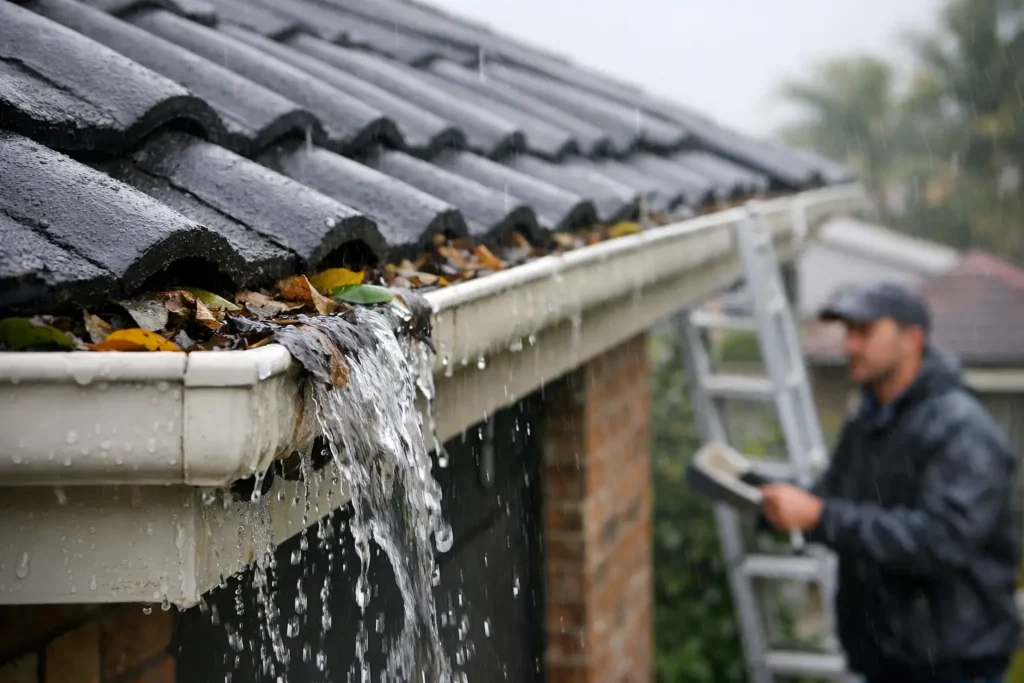
A gutter overflowing in a downpour is not just annoying. Water can run behind the gutter, soak fascia boards, flood garden beds, stain walls and find its way into the roof space. If you are wondering why gutters overflow, the answer is usually a blockage, poor drainage or a gutter system that is no longer doing the job it was designed to do.
For Sydney homeowners, heavy rain can expose a small gutter problem very quickly. A roof may look fine from the ground, but one blocked outlet or damaged valley can send a surprising amount of water where it should not go.
Why gutters overflow in heavy rain
Gutters overflow when rainwater enters faster than it can travel through the gutter and down the downpipes. Sometimes that only happens during a proper storm, but it is still a warning sign worth acting on. Your gutter system should cope with normal heavy rainfall when it is clean, correctly pitched and connected to clear downpipes.
The most common cause is built-up leaf litter. Leaves, twigs, bark, roof grit and even nesting material settle in the gutter or collect around the downpipe outlet. Over time, this debris forms a dam. Water backs up behind it and spills over the front edge or, worse, over the back of the gutter against the house.
Overflow can also happen when the gutter itself is clean but the downpipe is blocked. Rubbish can lodge in the downpipe bend, at the stormwater connection or beneath a leaf guard. From the roofline, the gutter may appear to be overflowing for no obvious reason, while the real blockage is further down.
Leaf build-up and roof debris
Trees close to the home are a major factor, especially after windy weather. Gum leaves are narrow enough to pass through some gutter guards, then mat together around outlets. Tile roofs can also shed moss, lichen and mortar grit after cleaning or repair work. That material needs to be cleared out rather than left to wash into the drainage system.
A gutter guard can reduce the volume of leaves entering the gutter, but it is not a set-and-forget solution. Fine debris can still build up on top of the guard or underneath it, depending on the product and the roof layout. It needs inspection and maintenance like any other part of the roof.
Blocked or undersized downpipes
Downpipes are the exit route for roof water. If there are too few downpipes, they are too small for the roof catchment, or they are blocked, water has nowhere to go. This is especially noticeable on large roof sections and valleys, where a big amount of water is concentrated into one point.
An older home may have a gutter and downpipe setup that was adequate years ago but is not ideal after an extension, pergola, roof alteration or changes to the surrounding drainage. Adding capacity can be more effective than repeatedly cleaning a system that is simply undersized.
Incorrect gutter fall
Gutters need a slight fall towards the downpipe outlet. It is not always obvious from ground level, but a gutter that has sagged can hold pools of water instead of draining properly. Standing water attracts debris, adds weight and speeds up corrosion in metal gutters.
Loose brackets, damaged fascia boards and movement over time can all affect gutter fall. If water consistently overflows from the middle of a gutter run while the outlet remains dry or slow, the pitch is worth checking.
Damaged gutters, valleys and roof edges
Cracks, rust holes, separated joins and bent gutter sections can all change the way water flows. In some cases, what looks like an overflowing gutter is actually a leaking gutter joint. Water may run down the outside of the gutter, drip from a corner or travel behind it.
Roof valleys matter too. A valley channels water from two roof sections into the gutter. When leaves build up in the valley, water can jump over the side, flow beneath tiles or dump into one small section of gutter all at once. A rusted or damaged valley can create roof leaks that are mistaken for gutter problems.
Signs your gutter problem is causing damage
Do not wait for water to appear inside before looking into an overflow issue. External warning signs often show up first. Peeling paint beneath the eaves, dark stains on fascia boards, rust streaks, mould around outside walls and eroded soil below the roofline are all signs that water is regularly escaping the system.
Inside the home, look for damp patches on ceilings near external walls, musty smells in the roof space or bubbling paint. These symptoms can come from several roofing issues, so they need proper inspection rather than guesswork. A gutter overflow can contribute to water getting behind the fascia or into vulnerable roof areas, particularly in driving rain.
You may also notice water pooling near the slab, footings or pathways. Over time, poor roof drainage can affect landscaping, encourage damp conditions and put unnecessary moisture around the home. It is a simple problem that can become expensive if it is ignored for too long.
What to check before the next storm
If it is safe to do so, observe where the water goes during light to moderate rain. You are looking for slow drainage, water spilling from one point, water running behind the gutter, or downpipes that are not discharging as expected. Do not climb onto a wet roof or use a ladder in poor weather.
From the ground, check whether there are trees overhanging the roof, visible leaf build-up in valleys, sagging gutter lengths or staining below gutter joins. You can also look at the downpipe outlets at ground level. If they are overflowing, slow to drain or constantly wet long after rain has stopped, there may be a blockage in the stormwater line.
For a single-storey home, some basic cleaning can be manageable with the right equipment and safe ladder practices. But roof and gutter work carries real risks. Two-storey homes, steep roofs, brittle tiles, damaged gutters and blocked downpipes are better left to trained professionals with proper access equipment and insurance.
How to stop gutters overflowing
The right fix depends on the cause. Clearing gutters and valleys is often the first step, but it should not be the only step. Once the debris is removed, the system needs to be checked for rust, loose brackets, poor fall, damaged outlets and downpipe blockages.
A professional gutter clean should include more than scooping leaves out of the visible gutter line. It should address valleys, downpipe outlets and the condition of the roof drainage system. If a gutter is holding water, sagging or leaking at joins, repair or replacement may be the more cost-effective option.
For homes with ongoing leaf problems, practical improvements may include trimming back overhanging branches, fitting suitable gutter protection, increasing downpipe capacity or changing the drainage layout. Each option has trade-offs. Gutter guards can reduce cleaning frequency, for example, but they still need maintenance and must suit the roof type and surrounding trees.
Preventative maintenance saves bigger repairs
Most gutter overflows are preventable with regular attention. As a general guide, gutters should be inspected at least twice a year, and more often if your property is surrounded by trees. It is also smart to arrange a check after major storms, particularly if branches or roof debris have come down.
A roof inspection at the same time can pick up cracked tiles, deteriorating pointing, worn valleys and other small issues before water gets into the roof space. That is usually far cheaper than dealing with damaged ceilings, rotten timber or mould later.
DJ Roofing & Restoration provides practical gutter cleaning, roof repairs and drainage checks for Sydney homes. If your gutters are overflowing, a proper inspection can identify whether the problem is simple leaf build-up or something that needs repair before the next heavy rainfall.
Water should leave your roof quickly, cleanly and well away from the house. Sorting out an overflowing gutter now is one of those straightforward maintenance jobs that helps protect everything underneath it.