
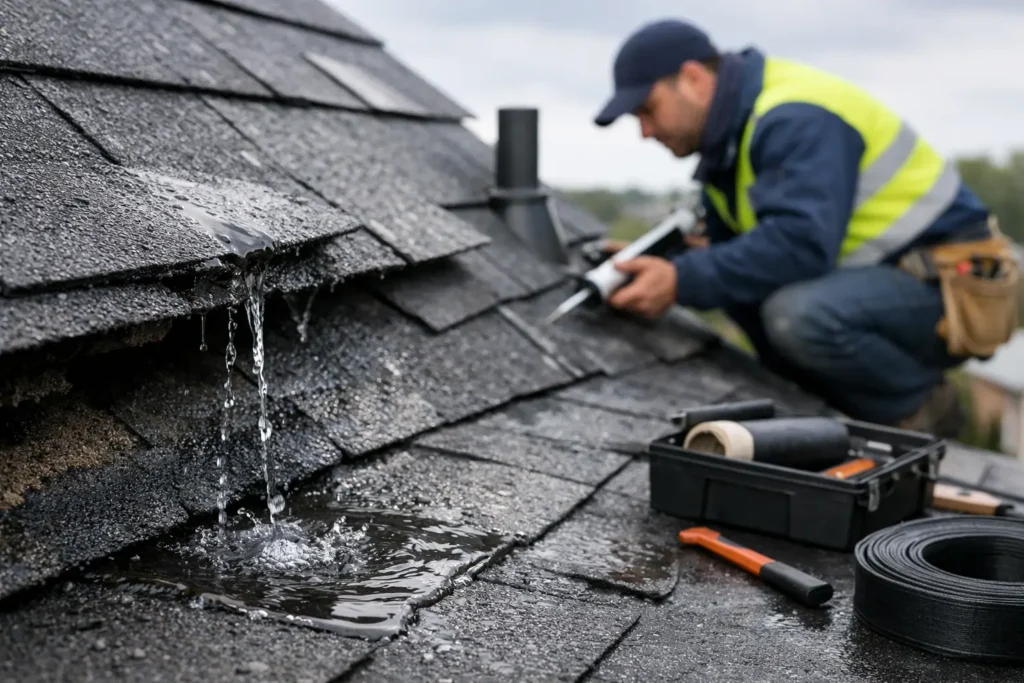
A water stain on the ceiling rarely tells the full story. By the time you notice a drip indoors, the real problem has often been building for weeks or months on the roof. That is why homeowners often ask what is roof leak repair, and whether it means a quick patch or something more involved.
The short answer is this: roof leak repair is the process of finding where water is getting in, fixing the source properly, and addressing any roofing issues that could cause the leak to return. It is not just putting sealant over a wet spot and hoping for the best. A proper repair gets to the cause, whether that is broken tiles, damaged flashing, cracked pointing, rusted metal, blocked valleys, or wear around roof penetrations.
What is roof leak repair in practical terms?
In practical terms, roof leak repair means diagnosing the entry point of water and carrying out the right repair for that roof type and condition. On a tiled roof, that may involve replacing cracked or slipped tiles, rebedding ridge capping, repointing, or repairing valley irons. On a metal roof, it could mean fixing loose screws, replacing rusted sheets, resealing laps, or repairing flashing around chimneys, skylights, and vents.
The key point is that a leak repair should match the problem. Some leaks are straightforward. Others travel along battens, insulation, or timber before showing up inside, which means the visible stain is not always directly under the fault. That is why experience matters. A roof can leak in one spot and show damage somewhere completely different.
For Sydney homeowners, this matters even more because roofs cop plenty – strong sun, heavy rain, wind, leaf build-up, and general ageing. A roof that looks mostly fine from the street can still have weak points that let water in during the next storm.
Why roofs start leaking
Most roof leaks are caused by deterioration, storm damage, poor previous repairs, or lack of maintenance. Tiles can crack from age or impact. Ridge caps can loosen as bedding and pointing break down. Flashings can lift or rust. Valleys can fill with debris and trap water. Gutters can overflow and push water back where it should never go.
Sometimes the issue is obvious, like a missing tile after strong winds. Sometimes it is cumulative. A roof may have several minor defects that together create a leak under pressure from driving rain. That is why a proper inspection matters more than guesswork.
The age of the roof also plays a part. Older roofs often do not need full replacement straight away, but they do need targeted repairs to keep them weatherproof. In many cases, sensible repair work is far more affordable than replacing an entire roof before it is necessary.
Signs you may need roof leak repair
A ceiling stain is one sign, but it is not the only one. Damp patches, mould smells, peeling paint, bubbling plaster, or water marks near cornices can all point to a roof leak. You may also notice drips during heavy rain, or hear water where it should not be.
Outside, there can be clues as well. Broken tiles, rust spots, sagging gutters, debris-filled valleys, cracked mortar, and loose ridge capping often indicate trouble. If your roof has not been checked in years, especially after rough weather, it is worth having it looked at before a small issue becomes internal water damage.
It also depends on timing. Some leaks only show up during wind-driven rain and then seem to disappear. That does not mean the problem has gone away. It usually means the roof is vulnerable under certain conditions, which is exactly the sort of issue that becomes worse over time.
What a proper roof leak repair should include
A proper leak repair starts with inspection, not assumptions. The roof surface, ridges, flashings, valleys, gutters, and penetrations all need to be checked. In some cases, the roof cavity also needs inspection to trace moisture paths and confirm where water is travelling.
Once the cause is identified, the repair should deal with the failing component itself. If tiles are cracked, they should be replaced. If ridge capping is loose, rebedding and repointing may be required. If flashing has failed, it should be repaired or replaced. If a valley is rusted or blocked, that needs attention too.
This is where trade-offs come in. A cheap patch may stop water briefly, but it can leave the underlying issue untouched. That often leads to repeat call-outs and more damage to ceilings, insulation, timber, and paintwork. A better-quality repair costs more upfront than a quick dab of sealant, but it usually saves money over the longer term.
What is roof leak repair not?
It is not a one-size-fits-all service. It is also not just roof painting, cleaning, or cosmetic work. Those services can help maintain a roof and improve its life span, but they do not automatically fix structural leak points.
It is also not always an emergency tarping job, although temporary measures may be needed after severe weather. Emergency protection has its place when rain is active, but it should be followed by permanent repairs once conditions allow.
Most importantly, leak repair is not about treating symptoms only. If someone repairs the ceiling stain without fixing the roof, the problem is still there. If someone seals over a crack without checking surrounding roof elements, there is a good chance the leak will return.
Common roof leak repairs on Sydney homes
Sydney homes commonly need tile replacement, ridge cap repairs, repointing, valley repairs, flashing replacement, gutter clearing, and repairs around skylights or vents. Blocked gutters and valleys are especially common where there are overhanging trees, because debris holds moisture and redirects water.
Terracotta and cement tile roofs each have their own wear patterns. Cement tiles may become porous with age, while terracotta roofs can suffer from cracked tiles and ageing pointing. Metal roofs can develop rust, fastener issues, and flashing failures. The right repair depends on the roof material, the age of the roof, and how widespread the damage is.
That is why a proper quote should be specific. Homeowners should know what is being repaired, why it is needed, and whether there are any related maintenance issues worth dealing with at the same time.
Repair or replace – how do you know?
This is one of the biggest questions homeowners ask, and the honest answer is that it depends on the condition of the roof as a whole. If the leak comes from a limited fault on an otherwise serviceable roof, repair is usually the smart option. If the roof has widespread damage, repeated leaking in multiple areas, or major structural wear, replacement may need to be considered.
A reliable roofer should not push replacement when a solid repair will do the job. The goal should be value for money. Many roofs have years of life left in them with the right repairs and maintenance.
For homeowners trying to manage costs, this matters. Fixing leaks early is usually far cheaper than waiting until water damages plaster, insulation, electrical fittings, and timber framing. A smaller roofing bill now can prevent a much bigger interior repair bill later.
Why fast action matters
Roof leaks rarely stay small. Water spreads, timber stays damp, mould grows, and minor defects open up further in bad weather. What starts as a single leak can become ceiling damage, rotten battens, stained walls, and expensive repairs inside the home.
Fast action does not mean rushing into the wrong fix. It means having the roof assessed properly and getting clear advice on what needs to be done now versus what can be planned later. Good roofing advice is practical. It prioritises the leak, explains the condition of the roof, and helps you avoid spending money where you do not need to.
For Sydney homeowners, that straightforward approach is what makes roof leak repair worthwhile. You want the source found, the work done properly, and the roof left in a condition that holds up when the next storm comes through.
If you are seeing signs of water entry, the best move is not to wait for a bigger leak. Get the roof checked, get a clear quote, and deal with the cause while it is still manageable. A sound repair now can add years to the life of your roof and spare you a lot of grief later.