
A roof leak rarely starts as a major disaster. It might show up as a faint water mark on the ceiling after heavy rain, a cracked tile near the ridge, or gutters overflowing onto the eaves. The question for many homeowners is whether they need roof repair or restoration. The right answer depends on the condition of the whole roof, not just the most obvious problem.
A targeted repair can be the smart, affordable choice when damage is limited. A full restoration makes more sense when age, wear and multiple small faults are catching up with the roof. Getting this call right can prevent costly water damage and help you avoid replacing a roof before it is truly necessary.
When roof repair is the right move
Roof repairs are designed to fix a specific fault before it spreads. This might include replacing cracked or broken tiles, repairing a leak, renewing damaged flashing, clearing blocked gutters or replacing rusted roof valleys. For a metal roof, it can involve sealing around penetrations, treating isolated rust and repairing loose sheets or fixings.
Repair work is usually the best option when the roof is generally sound and the issue is contained. For example, a few tiles may have cracked after a storm, or one section of pointing may have deteriorated around the ridge capping. There is no need to pay for a complete restoration if the rest of the roof has good years left in it.
The key is finding the actual source of the problem. Water does not always enter directly above the ceiling stain. It can travel along timbers, under tiles or through gaps around valleys and flashing before it becomes visible indoors. A proper roof inspection looks beyond the symptom and checks the surrounding areas as well.
Small repairs are worth acting on quickly. One slipped tile or blocked valley may not seem urgent on a dry day, but Sydney downpours can expose weak points fast. Prompt repairs protect insulation, ceiling linings, wall frames and electrical fittings from avoidable moisture damage.
When roof restoration is the better investment
A roof restoration is a broader process for roofs that are weathered across several areas but still have a solid structure. It is not simply a coat of paint. Done properly, restoration addresses the condition of the roof first, then improves its appearance and protection.
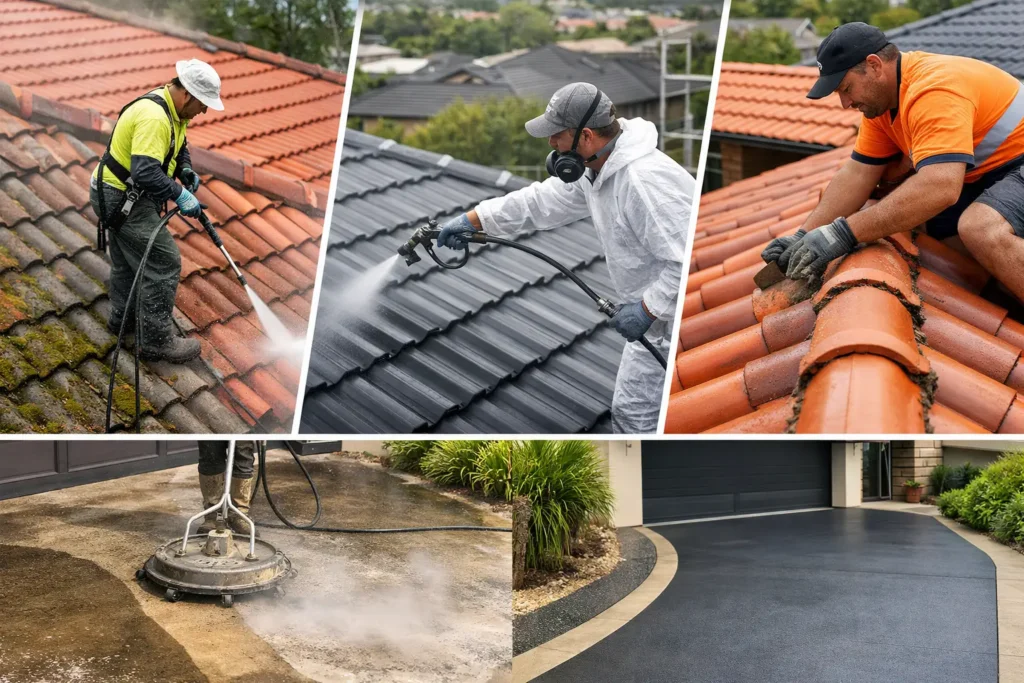
For tiled roofs, this often involves replacing damaged tiles, pressure cleaning built-up dirt and moss, re-bedding loose ridge caps where needed, repointing joints, checking valleys and applying a suitable roof coating. Metal roofs may need preparation, rust treatment, repairs and a quality paint system suited to the material.
Restoration can be a practical alternative to full replacement where the roof has widespread cosmetic fading, ageing pointing, dirt buildup or several minor maintenance issues. It gives the whole roof attention rather than fixing one fault at a time while others continue to develop.
Common signs that a restoration may be worthwhile include:
- Faded, patchy or peeling roof paint
- Ridge capping with cracked or loose pointing
- Moss, lichen or heavy grime across the roof surface
- Multiple cracked, broken or displaced tiles
- Rust starting to appear in several areas of a metal roof
- Recurring leaks or repairs in different parts of the roof
There is a trade-off. Restoration costs more upfront than a small repair because it involves more labour, preparation and materials. But if the roof has a growing list of minor faults, repeated call-outs can become poor value. Restoring the roof in one planned job may deliver better long-term protection, a cleaner finish and stronger street appeal.
Roof repair or restoration: what should you consider?
The best choice comes down to the roof’s age, material, overall condition and the cause of the issue. A newer roof with one broken tile needs a different response to a 25-year-old tiled roof with faded coating, worn pointing and recurring water entry.
Start with the roof’s structure. If the battens, trusses and roof covering are in good condition, repair or restoration may be enough. If there is extensive corrosion, widespread tile failure or structural damage, replacement could be the more sensible option. A reliable roofer should tell you plainly when restoration is not the right fix.
Next, consider the pattern of repairs. A one-off issue is usually just that. But when leaks keep appearing in new places, ridge caps are failing along the roofline, or broken tiles are becoming common, the roof may need more than patching. The aim is to solve the cause, not keep applying temporary fixes.
Appearance matters too, particularly if you are preparing to sell, leasing out an investment property or simply want to improve the look of your home. A clean, professionally restored roof can make a noticeable difference from the street. It also shows that the property has been maintained, which can give buyers and tenants more confidence.
Budget should be considered honestly. The cheapest quote is not always the lowest-cost option over time. Ask what work is included, whether damaged materials will be replaced, how surfaces will be prepared and what areas are excluded. Clear scope matters because roof work is only as good as the preparation behind it.
Why an inspection comes before the quote
No homeowner should be expected to diagnose their own roof from ground level. Some problems are easy to spot, but others are hidden beneath tiles, around flashing or in valleys where leaves and debris collect. An inspection allows the contractor to assess the roof safely and recommend work based on what is actually there.
A useful inspection should check for broken tiles, loose bedding and pointing, worn valley iron, blocked gutters, cracked flashing, rust, deteriorated sealants and signs of water entry. It should also consider ventilation. In some homes, a whirlybird can help improve airflow in the roof space and reduce heat buildup, although it will not fix a leak or replace needed repairs.
At DJ Roofing & Restoration, the focus is on giving homeowners straightforward advice about what needs attention now, what can be monitored and whether repair or restoration represents better value. That is the kind of practical recommendation that helps avoid surprise costs later.
Maintenance keeps a good roof working longer
Whether you choose repairs or a restoration, regular maintenance makes a real difference. Leaves, dirt and moss hold moisture against roof materials. Blocked gutters and valleys can send water back under tiles or into eaves during heavy rain. A roof that looks dirty can also hide cracks, rust and loose components.
Gutter cleaning, roof cleaning and periodic checks after storms are simple ways to reduce risk. Trim back overhanging branches where practical, as they can drop debris, scrape roof surfaces and give pests easier access to the roofline. If you notice water marks, mouldy smells in the roof space, overflowing gutters or loose tiles after wind, arrange an inspection rather than waiting for the next storm.
Roof paint also needs the right preparation and product for the roof material. Cement tiles, terracotta and metal roofs all need different approaches. Painting over dirt, loose coatings or unrepaired faults may improve the colour briefly, but it will not provide a lasting result.
Make the decision before a small issue becomes expensive
A roof does not need to be failing completely before work is worthwhile. The best time to deal with cracked tiles, worn pointing, rust or blocked valleys is before water reaches the inside of the home. Early action generally gives you more options, from a straightforward repair through to a planned restoration that improves both protection and presentation.
If you are unsure what your roof needs, arrange a professional inspection and ask for a clear explanation of the recommended work. A good roofer will help you spend money where it counts, protect your home properly and keep your roof looking the part for years to come.