
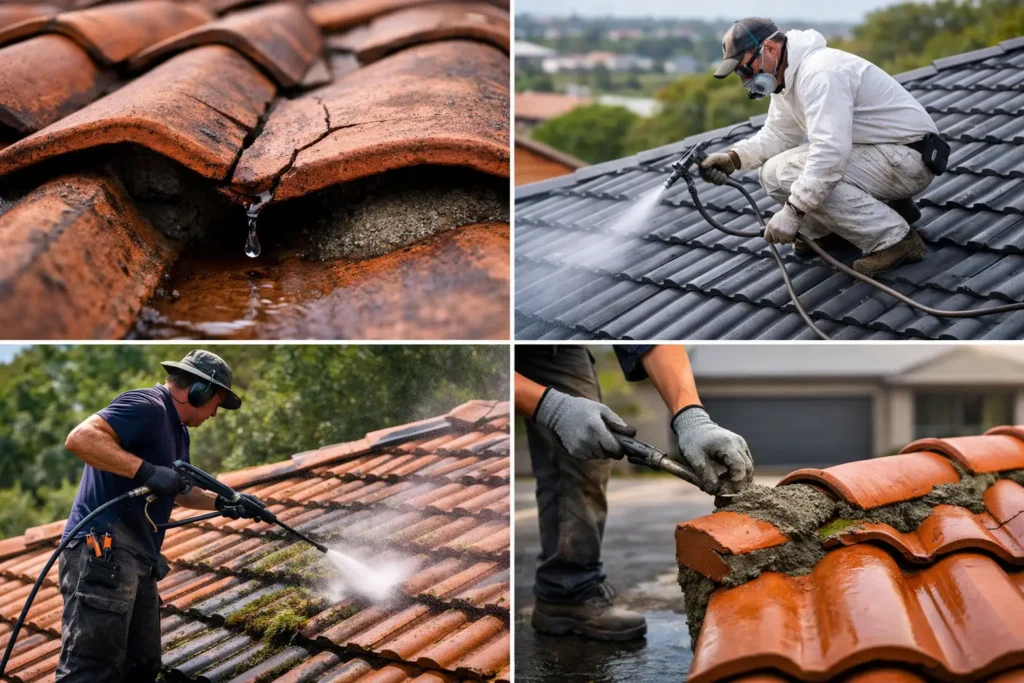
A single cracked tile can look like a small cosmetic issue from the driveway. But can cracked roof tiles leak? Yes – and in Sydney, where heavy rain, wind and summer heat all put pressure on ageing roofs, even a minor crack can give water a path into the roof space.
The catch is that a cracked tile does not always cause an obvious ceiling stain straight away. Water can travel along sarking, battens or timbers before it shows up inside. By the time you notice a brown mark on the ceiling, dripping water or mouldy smells, the leak may have been happening for some time.
Can cracked roof tiles leak into your home?
Roof tiles are designed to overlap and shed water down the roof. When one tile is cracked, broken, slipped out of position or missing altogether, rain can get beneath the surface and into areas that should stay dry.
How serious it becomes depends on the crack, the roof pitch and what sits underneath the tiles. A hairline crack may only let in water during wind-driven rain. A split tile, broken corner or damaged tile around a valley can let in much more water, much faster.
It is also common for a roof to have more than one issue. A cracked tile might be the visible problem, while worn pointing, damaged bedding, a blocked valley or deteriorated flashing is the actual entry point. That is why a proper inspection matters. Replacing one tile without checking the surrounding roof can leave the leak unresolved.
Why cracked tiles become a bigger problem
Cement and terracotta tiles are durable, but they are not indestructible. Years of weather exposure, movement in the roof structure and foot traffic can all cause damage. On older roofs, the materials holding ridge caps in place can also become brittle or cracked.
Water entering through damaged tiles can wet insulation and ceiling linings, stain plaster, affect electrical fittings and encourage mould growth. It can also keep roof timbers damp over long periods. Repairing a few tiles early is generally far more affordable than repairing internal water damage later.
A leak can be especially frustrating because it may only appear after certain weather conditions. You might have a roof that looks fine through light rain but leaks during a southerly storm. Wind can push water sideways and uphill beneath tiles where normal rainfall would simply run off.
Signs a cracked roof tile may be leaking
You do not need to climb onto the roof to spot every warning sign. In fact, walking on tiled roofs without the right experience can crack more tiles and create a safety risk. Start from the ground, then look inside the roof space only if it is safe and accessible.
Common signs include a visible broken or slipped tile, pieces of tile in the gutter, water marks on ceilings, peeling paint, damp insulation or a musty smell in the roof space. You may also notice a stain that becomes darker after rain, even if it dries out again afterwards.
Outside, check for cracked ridge pointing, loose ridge caps, debris collecting in valleys and gutters that are overflowing. Blocked gutters can force water back under the lower rows of tiles, making it look like the roof itself has failed.
If you see water near a light fitting, do not touch the fitting or attempt a temporary repair from inside. Turn off power to the affected area if it is safe to do so, and arrange a qualified inspection promptly.
Cracked tile or another roof fault?
A roof leak is not always directly below the damaged tile. Water follows the easiest route, so the ceiling stain can be several metres away from where rain first gets in. This is one reason guesswork can be costly.
Ridge caps and pointing
Ridge caps run along the highest points and joins of a tiled roof. When the flexible pointing cracks or lifts, water can enter around the ridge line. Loose bedding beneath the caps can make the problem worse, particularly in strong winds.
Valleys
Roof valleys carry a large amount of rainwater. Leaves, dirt and moss can build up there, slowing drainage and allowing water to back up under nearby tiles. Rusted or damaged valley metal can also leak, even when the tiles look sound.
Flashings and roof penetrations
Areas around vents, chimneys and other roof penetrations need sound flashing to direct water away. A tile may appear cracked near one of these areas, but the flashing could be the issue that needs attention.
Gutters and downpipes
Overflowing gutters are often overlooked. When gutters are full of leaf litter, water can sit at the roof edge and push back under tiles during heavy rain. Regular gutter cleaning is practical preventative maintenance, not just a tidy-up job.
What to do when you find a cracked tile
Do not ignore it, but do not rush into an unnecessary full roof replacement either. Many tiled roof leaks can be fixed with targeted repairs when the rest of the roof is in reasonable condition.
First, take a photo from the ground if you can clearly see the damage. Note when the leak occurs and where you are seeing water marks inside. This information can help identify whether the issue is linked to driving rain, an overflowing gutter or a particular section of roof.
Next, arrange a professional roof inspection. A roofer can check the cracked tile and the tiles around it, assess ridge caps and pointing, inspect valleys, and look for signs of water entry in the roof space. The right repair may involve replacing damaged tiles, re-bedding and repointing ridge caps, clearing gutters and valleys, or replacing a damaged valley section.
For a short-term emergency during rain, place a bucket under an active internal drip and move furniture, rugs and valuables away from the area. Avoid trying to seal tiles with household silicone or climbing up with a tarp. A poorly placed temporary fix can trap water, damage more tiles or make the final repair harder.
When repairs are enough and when restoration makes sense
A few isolated cracked tiles on an otherwise well-maintained roof can usually be repaired without major work. This is often the most cost-effective option and can stop water getting in quickly.
If cracked tiles are appearing across several areas, the pointing is failing, the roof is heavily weathered and the surface is covered in moss or lichen, it may be worth considering a broader roof restoration. Restoration can address multiple weak points at once, improve the roof’s appearance and help extend its service life.
The best option depends on the condition of the full roof, not just the first cracked tile you notice. A straightforward inspection and clear quote should explain what is urgent, what can be monitored and what work will give you the best value over time.
Preventing future tile leaks
Tiled roofs benefit from regular checks, particularly after severe storms or prolonged periods of rain. Keep gutters and valleys clear, watch for cracked pointing and have visible broken tiles replaced before the next wet spell. Tree branches rubbing on the roof should also be trimmed back where appropriate, as they can damage tiles and fill gutters with leaves.
Professional roof cleaning can help remove built-up dirt, moss and lichen, but it needs to be done carefully. The goal is to clean the roof without damaging tiles, pointing or surrounding areas. Once the roof is clean, small defects are also easier to spot and repair.
A cracked roof tile is rarely something that gets better with time. Getting it checked while the issue is small can protect the parts of your home you cannot see – and save you from a much larger repair after the next Sydney downpour.