
Blocked gutters are easy to ignore until the first heavy downpour sends water over the edge, down exterior walls and into places it should never reach. Knowing how to clean roof gutters properly helps protect your roof, fascia boards, eaves and foundations from avoidable water damage.
For many Sydney homes, leaves, seed pods, dirt and roof grit can build up faster than expected. A quick clean at the right time is far cheaper than repairing rotten timber, replacing damaged valleys or chasing a leak that started with a simple blockage.
Why clean gutters before they become a roofing problem?
Your gutters have one straightforward job: collect rainwater from the roof and move it safely through the downpipes and away from the house. When that path is blocked, water backs up under the roof edge, spills over the gutter and can pool around the property.
Overflow can stain walls, damage paintwork and saturate garden beds. More seriously, standing water and trapped debris hold moisture against metal components and timber fascia, which can speed up corrosion and rot. On tiled roofs, a blocked valley or gutter may also make an existing cracked tile, failed pointing or flashing issue harder to spot.
Gutter cleaning is preventative maintenance. It gives you a clear view of the roofline and lets you deal with small issues before they turn into a bigger repair bill.
When should you clean your roof gutters?
Most homes benefit from a gutter clean at least twice a year, usually before the wetter months and again after autumn leaf fall. Homes beneath large trees, near bushland or exposed to plenty of wind may need attention every three to four months.
Do not wait for an overflow to tell you there is a problem. Water marks below the gutter, sagging sections, plants growing from the gutter and slow-draining downpipes are all signs that cleaning is overdue. It is also worth checking after a major storm, as branches and roof debris can quickly create a blockage.
What you need for a safe gutter clean
The job is simple in theory, but working at height is not. Before starting, make sure conditions are dry, bright and calm. Never work from a ladder in rain, high wind or on a wet roof.
For a basic clean, have the following ready:
- A stable extension ladder with a ladder stabiliser where possible
- Heavy-duty gloves, eye protection and enclosed non-slip footwear
- A small scoop, bucket or rubbish bag for leaves and sludge
- A garden hose with a spray nozzle
- A plumber’s snake or similar tool for stubborn downpipe blockages
Set the ladder on level, firm ground. Keep it clear of power lines, use a spotter if available and avoid leaning sideways to reach further along the gutter. Move the ladder instead. If you cannot safely reach an area from the ladder, that is the point to call a professional rather than climbing onto the roof.
How to clean roof gutters step by step
Start with a ground-level inspection
Walk around the house first. Look for obvious gutter sagging, loose brackets, rust holes, damaged downpipes and sections where water has been overflowing. Check the ground below for mud channels or pooling, as these can show where drainage is failing.
This first check matters because a gutter full of leaves is one issue. A gutter that has pulled away from the fascia, has rusted through or has a cracked outlet needs repair as well as cleaning.
Remove dry debris by hand
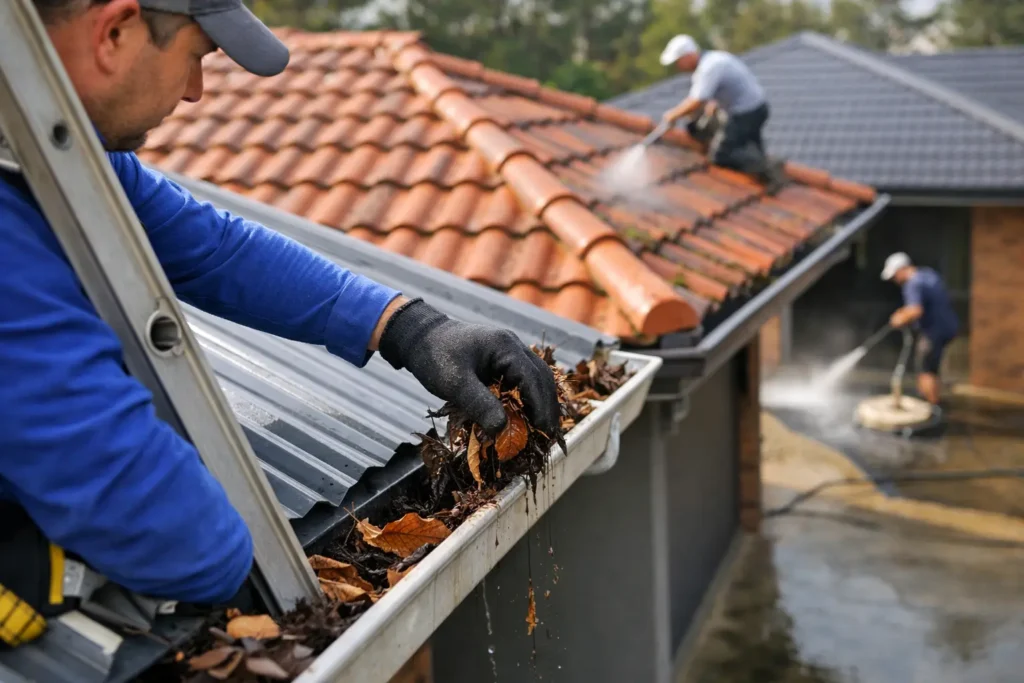
Position the ladder securely and start at the downpipe end of each gutter run. Wearing gloves, remove leaves, twigs, roof moss, mud and other built-up material with a scoop or by hand. Place it in a bucket rather than dropping it into garden beds or onto the footpath.
Work in short sections. Pay close attention to gutter corners, valley outlets and the area around downpipe openings. These are common choke points, particularly on homes with tiled roofs where fine grit and moss wash down with rainwater.
Do not force tools under roof tiles or pry at metal flashing. If debris is packed under the roof edge, or you can see cracked tiles and loose mortar while working, leave it alone until it can be assessed properly.
Flush the gutter with a hose
Once the larger debris is removed, flush the gutter from the end furthest away from the downpipe. This pushes remaining dirt towards the outlet and shows whether the water is flowing freely.
A little residue is normal, but water should not sit in long pools. Standing water may mean the gutter has been installed with poor fall, has sagged over time or is blocked at the outlet. Cleaning alone will not correct a gutter that is out of alignment.
Avoid using a high-pressure washer from a ladder. High pressure can force water beneath roof tiles, damage old seals and make footing more dangerous. A normal hose is usually enough for gutters after the heavy debris has been removed.
Clear and test the downpipes
If water backs up at the downpipe opening, turn off the hose and clear visible material first. A plumber’s snake can help break up a blockage lower in the pipe. Flush again with the hose to confirm the water exits freely at ground level.
For downpipes connected to underground stormwater, a stubborn blockage can be further down the drainage line. Repeatedly forcing water into it can cause an overflow near the house, so it is better to arrange professional help if the pipe will not clear.
Check the roof edge while you are there
A gutter clean is a good opportunity to inspect the visible roofline. Look for loose gutter clips, peeling fascia paint, rusted metal, damaged valley ends, broken tiles and signs of water tracking behind the gutter.
You do not need to diagnose every issue yourself. Taking note of what you can see makes it easier to arrange the right repair before the next period of heavy rain.
Should you install gutter guards?
Gutter guards can reduce the amount of large leaf debris entering a gutter, especially on homes surrounded by trees. They are not a maintenance-free solution, though. Fine debris, seed pods and roof grit can still settle on top of or beneath the guard, and blocked guards are often harder to clean.
The right option depends on the roof type, surrounding trees and gutter design. A good guard system should allow water to enter freely, sit securely and still permit access for future inspections. If a guard is poorly fitted, it can create more problems than it solves.
When a professional gutter clean is the safer choice
There is no prize for tackling a risky roof job yourself. Book a professional gutter clean if your home is two storeys, the roof is steep, access is limited, gutters are badly blocked, or you have fragile terracotta tiles, ageing metal sheeting or obvious roof damage.
A professional can clean the gutters while checking the condition of the roof, valleys, flashings and downpipes. This is particularly useful when you have noticed internal water stains, recurring overflow or a leak after rain. The source may be a blocked gutter, but it may also be cracked tiles, failed pointing, damaged valleys or deteriorated flashing.
For homeowners who want practical advice and repairs handled properly, DJ Roofing & Restoration can inspect the roof drainage system and provide a clear recommendation before minor maintenance becomes a costly restoration job.
A clean gutter is one of the simplest ways to look after your home, but safe access always comes first. If the ladder, roof pitch or condition of the gutter gives you any doubt, leave the job to an experienced roofer and keep your feet on the ground.