
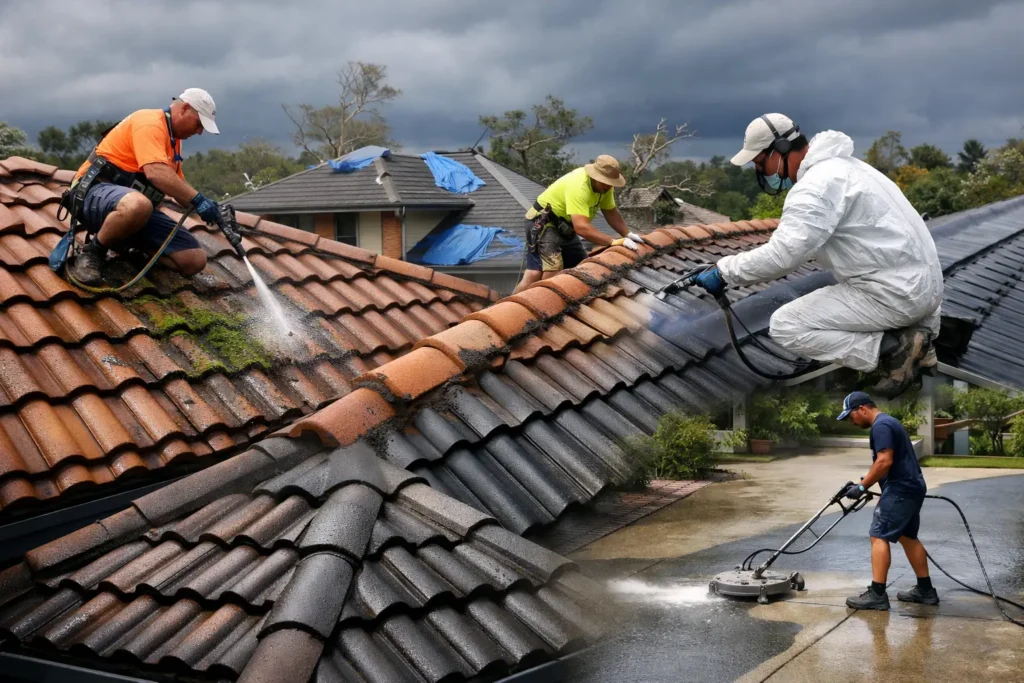
A hard Sydney storm can expose a roof problem in minutes. Wind lifts tiles, rain finds an old crack, gutters overflow and water starts tracking into the ceiling. Proper storm damage recovery is about acting quickly without making the damage worse, then fixing the cause properly so the next downpour does not bring the same problem back.
The first priority is safety. The second is limiting water entry. Cosmetic work can wait, but a leak, loose roofing material or blocked drainage needs attention before it turns into damaged insulation, stained ceilings, mould or timber deterioration.
What to Do Straight After a Storm
Do not climb onto a wet roof to inspect it yourself. Tiles, metal sheeting and mossy surfaces are slippery, and storm damage can leave sections unstable. Check from the ground where possible, and use a torch inside the roof space only if it is safe to access.
If water is coming through the ceiling, move furniture, rugs and electrical items away from the area. Use buckets to catch drips, but avoid puncturing a sagging ceiling unless you understand the risks and can do so safely. A ceiling holding a large amount of water can collapse without much warning.
There are a few practical signs worth looking for around the home:
- broken, shifted or missing roof tiles visible from the ground
- metal sheets, flashings or ridge caps that have lifted or moved
- overflowing gutters, downpipes or water running behind them
- ceiling stains, bubbling paint, damp cornices or active drips
- branches resting on the roof, damaged solar panels or debris in valleys
Take clear photos and short videos from safe positions. This gives you a record of what happened and may help if you need to speak with your insurer. It also helps a roofing professional see whether the issue is likely to be urgent before arriving on site.
Storm Damage Recovery Starts With the Roof
A roof is a system, not just a layer of tiles or metal. Water can enter through a cracked tile, failed pointing, a lifted valley, worn flashing, blocked gutter or damaged pipe penetration. The visible leak inside is often some distance from the actual entry point.
That is why a proper inspection matters. A quick patch over the obvious spot may stop water temporarily, but it will not solve drainage problems or aged roof components that are likely to fail again. The best repair depends on the roof type, the age of the materials and the extent of the storm damage.
For tiled roofs, a roofer may find cracked or dislodged tiles, deteriorated bedding, loose ridge caps, worn valleys or broken pointing. Replacing damaged tiles and repairing ridge capping can restore the roof’s weather protection without the cost of a full replacement when the rest of the roof remains sound.
On metal roofs, attention usually turns to loose sheets, damaged screws, failed seals, lifted flashings and rusted sections. A small opening around flashing or a roof penetration can let in a surprising amount of water during wind-driven rain. These areas need to be secured and sealed with materials suited to the roof, not treated as a quick DIY job.
Temporary Protection Versus a Lasting Repair
After severe weather, temporary protection has its place. Covering an exposed section, securing loose material or clearing a blocked drainage point may prevent further water damage while permanent repairs are organised. But temporary work should be treated as exactly that – a short-term measure.
A lasting repair addresses why the roof failed. If wind has exposed weak ridge capping, simply replacing one tile may not be enough. If leaves and sediment have filled the gutters and valleys, the roof can continue to overflow even after a leak is repaired. If the roof coating has worn away and the surface is ageing, restoration may be the better value option over repeated isolated repairs.
There is no one-size-fits-all answer. A roof with a few storm-damaged tiles may only need targeted repairs and a gutter clean. A roof showing widespread deterioration may benefit from re-bedding, repointing, valley replacement, cleaning and painting as part of a planned restoration. A trustworthy roofer should explain the difference clearly and give you a practical recommendation, not push unnecessary work.
Do not overlook gutters and valleys
Gutters are often where storm damage becomes an internal leak. Leaves, twigs and roof grit can block the flow to downpipes, forcing water under eaves or back beneath roof materials. Valleys can also fill with debris, especially where nearby trees shed heavily.
Cleaning gutters and valleys after a storm is preventative maintenance, not just a tidy-up. It gives water a clear path away from the roof and lets a roofer check for corrosion, splits, loose brackets and damaged valley iron. If water has been overflowing for some time, it is worth checking fascia boards and eaves as well.
Protect Your Home While Repairs Are Organised
Once you have identified a likely roof issue, keep an eye on the affected area, especially if more rain is forecast. Empty buckets, keep the room ventilated where safe, and do not ignore a stain simply because the dripping has stopped. Moisture can remain in ceiling cavities and insulation long after the weather clears.
If you are making an insurance claim, read your policy and contact your insurer early. They may require photographs, invoices, a damage report or approval before certain work goes ahead. Emergency work to prevent further damage is often sensible, but keep records of all communication and any temporary repairs.
Be cautious about accepting an on-the-spot quote from someone who appears uninvited after a storm. Storms can bring out operators promising instant fixes with little inspection. Ask what work is needed, why it is needed and whether the contractor is insured. Clear scope, clear pricing and visible workmanship are worth more than a rushed promise.
When Roof Restoration Makes Better Sense
Storms often reveal issues that have been building for years. Faded roof paint, brittle pointing, recurring leaks, dirty tiles and blocked gutters may not have caused the storm, but they can make the roof less able to cope with it.
If an inspection finds broad wear rather than isolated impact damage, roof restoration can be a cost-effective way to extend the roof’s life. This may include high-pressure cleaning where appropriate, replacing broken tiles, repairing bedding and pointing, renewing valleys, treating problem areas and applying a suitable roof coating. It can improve weather resistance and street appeal at the same time.
Restoration is not always the answer. A roof with major structural issues, widespread severe corrosion or materials at the end of their service life may need a different approach. The key is getting an honest assessment before spending money on surface work that will not solve the underlying problem.
Get the Repair Done Before the Next Downpour
Waiting for a second leak is rarely a money-saving move. Water damage tends to spread quietly through insulation, plasterboard, timber and paintwork, making a manageable roofing repair far more expensive than it first appears.
DJ Roofing & Restoration provides practical roof inspections, repairs, gutter cleaning and restoration work for Sydney homeowners who want straight answers after rough weather. The right next step is a careful inspection, a clear quote and repairs that deal with the source of the problem. If your roof has taken a hit, arrange a check while the signs are still easy to identify.