
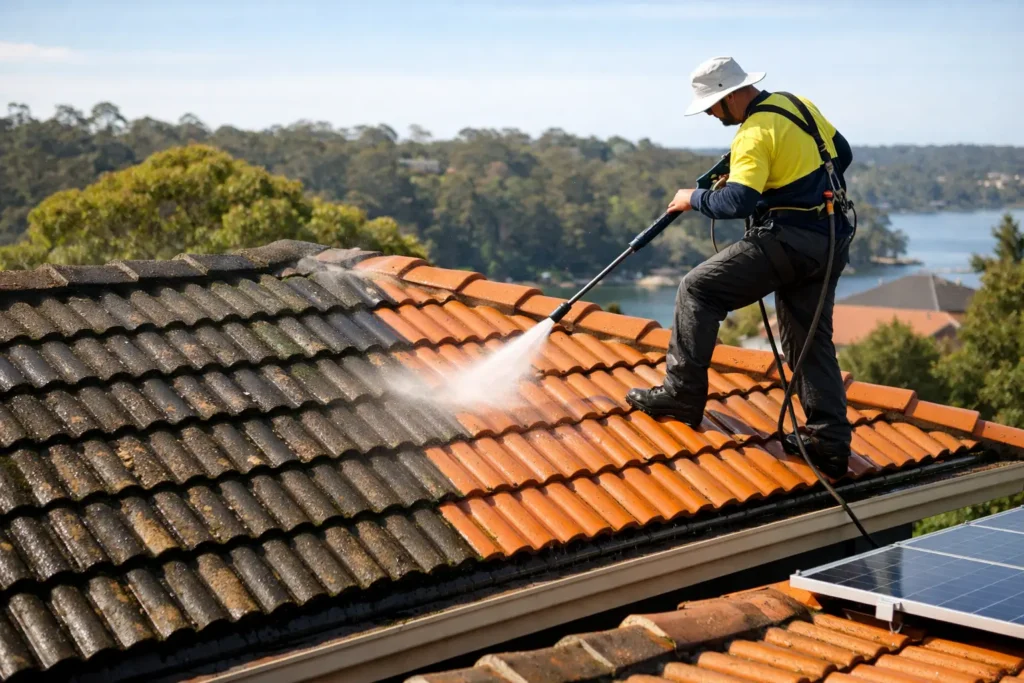
A roof can look tired long before it starts leaking. Dark streaks, moss around the tiles and a build-up of grime are common sights on Sydney homes, especially after wet weather and under overhanging trees. Proper roof washing Sydney homeowners can count on is not just about improving street appeal. It is a chance to clear away debris, inspect the roof surface and spot small issues before water finds its way inside.
A clean roof can make an older home look sharper, help gutters do their job properly and prepare the surface for painting or restoration. But it needs to be done with the right method. Too much pressure, poor access or a rushed clean can damage tiles, dislodge pointing and create problems that were not there before.
What a Professional Roof Wash Should Actually Do
Roof washing removes the dirt, leaf litter, moss, lichen and airborne pollution that settle on roof tiles and metal roofing over time. In Sydney, coastal air, shade, storms and gum trees can all speed up the build-up. It is not unusual for one side of a roof to be much dirtier than the other because it receives less sun and stays damp for longer.
The visible difference after cleaning is often substantial, but the practical benefit matters just as much. Moss and debris hold moisture against the roof surface. Leaves can collect in valleys and gutters, slowing drainage when heavy rain arrives. Cleaning these areas gives water a clear path off the roof instead of allowing it to pool where it should not.
A proper job also involves looking beyond the grime. Broken tiles, cracked ridge capping, worn pointing, loose flashing and blocked valleys can be easier to identify once the roof is clean. Washing is often the first sensible step before deciding whether a roof needs a minor repair, repointing, painting or a more complete restoration.
Roof Washing Sydney Homes Need Is Not One-Method-Fits-All
High-pressure washing can be highly effective on suitable cement tile roofs, particularly where years of moss, dirt and surface staining have built up. Done correctly, it can bring the roof back to a clean, even base ready for inspection or coating. The key words are done correctly. Water pressure, nozzle distance and working direction all matter.
The wrong approach can force water beneath tiles, strip aged surface material or disturb already weak ridge pointing. That is why the roof should be assessed before the wash begins, not after a problem appears. Older roofs with brittle tiles, existing cracks or loose bedding may need repairs first.
Terracotta, metal and painted roofs need their own approach. Terracotta tiles can be more delicate, and metal roofing requires care around laps, fixings and coatings. A professional will adjust the cleaning process to the roof material and its condition rather than treating every roof like the same job.
Chemical treatments can also have a place for certain organic growth, but they must be selected and applied carefully. Run-off needs to be managed to protect gardens, painted surfaces and surrounding areas. The best result is a clean roof without damage to the property around it.
Signs It Is Time to Book a Roof Clean
You do not need to wait until the roof is completely green or black to arrange maintenance. If you can see moss growing between tiles, leaves sitting in roof valleys, dirty water overflowing from gutters or dark staining spreading across the roof, it is time to have it checked.
Another sign is a roof that has lost its clean, even appearance while the rest of the property is well maintained. For homeowners preparing to sell, clean tiles and clear gutters can make a real difference to first impressions. For owners planning to stay put, regular cleaning helps keep minor maintenance from becoming an unpleasant surprise in the next downpour.
A roof wash is also worthwhile before roof painting. Paint should be applied to a properly cleaned and prepared surface. Painting over dirt, moss or loose material may look acceptable for a short time, but it will not deliver the finish or lifespan you are paying for.
Why Gutters and Valleys Should Be Included
The roof surface is only part of the drainage system. Gutters, downpipes and roof valleys need attention as well. When leaves and sludge build up, rainwater can back up beneath tiles or spill over the gutter line. That can affect fascia boards, eaves and the ground around the home.
Sydney storms do not give blocked gutters much forgiveness. A gutter that seems manageable in light rain can overflow quickly during a heavy burst. Clearing gutters and valleys at the same time as the roof wash is practical because the roof is already being accessed and loose debris is already being removed.
This is particularly relevant for homes near mature trees. You may need maintenance more often than a property in an open, exposed street. There is no single schedule that suits every roof. The amount of shade, nearby vegetation, roof pitch and condition all affect how quickly grime and debris return.
Safety Is Not the Part to Cut Corners On
Roof work is not a weekend job for most homeowners. Wet tiles are slippery, roofs can have hidden weak points and using high-pressure equipment at height adds another level of risk. There is also the risk of cracking a tile while walking across it, then not noticing the damage until the next rain event.
A professional roof cleaner uses appropriate access, safety equipment and techniques designed to minimise unnecessary foot traffic across the roof. They also understand how water moves over tiles and into valleys. That practical experience matters when cleaning around ridge lines, penetrations and difficult sections of the roof.
The cheapest quote is not always the best value if it only covers a quick surface clean and leaves the gutters full, the valleys blocked or existing roof damage ignored. Ask what is included, whether the roof will be inspected and what happens if broken tiles or failed pointing are found during the work. Straight answers upfront make it easier to compare quotes properly.
What to Expect From the Process
A quality roof wash starts with an inspection of the roof material, access points and obvious repair needs. If cracked tiles, loose ridge caps or other faults are found, these should be discussed before cleaning proceeds. In some cases, repairing first is the safer and more cost-effective option.
The cleaning process then removes built-up dirt and organic growth using the method suited to the roof. Gutters and valleys are cleared, and surrounding areas are rinsed or cleaned where required. A good contractor will not leave the footpath, driveway or garden covered in roof debris at the end of the job.
Once the wash is complete, the roof is easier to assess in its true condition. Some roofs simply need periodic cleaning and a few small repairs. Others show clear signs that re-bedding, repointing, tile replacement or roof painting would protect the home better over the long term. The right recommendation should be based on what the roof needs, not on selling work that is not necessary.
Cleaning, Repairs or Restoration: Which One Makes Sense?
It depends on the roof. If the tiles are sound and the ridge capping is in good condition, a professional wash and gutter clean may be all that is required to tidy the property and improve drainage. If there are a handful of cracked tiles or minor leaks, targeted repairs can often deal with the issue without the cost of a full restoration.
Where the roof has widespread faded colour, deteriorated pointing, repeated leaks or extensive surface wear, restoration may offer better value than continuing to patch problems. Cleaning is still part of that process, but it is not the whole solution. A roof inspection is the best way to separate cosmetic dirt from genuine maintenance needs.
DJ Roofing & Restoration provides practical advice based on the condition in front of us. If a roof only needs a thorough clean and a few repairs, that is what we will recommend. If restoration will give better protection and improve the look of the home, we will explain why and provide a clear quote.
A clean roof is easier to maintain, easier to inspect and far more likely to make the right impression. Before the next stretch of wet weather turns a blocked valley or hidden crack into water damage, arrange a professional inspection and get a clear view of what your roof needs.