
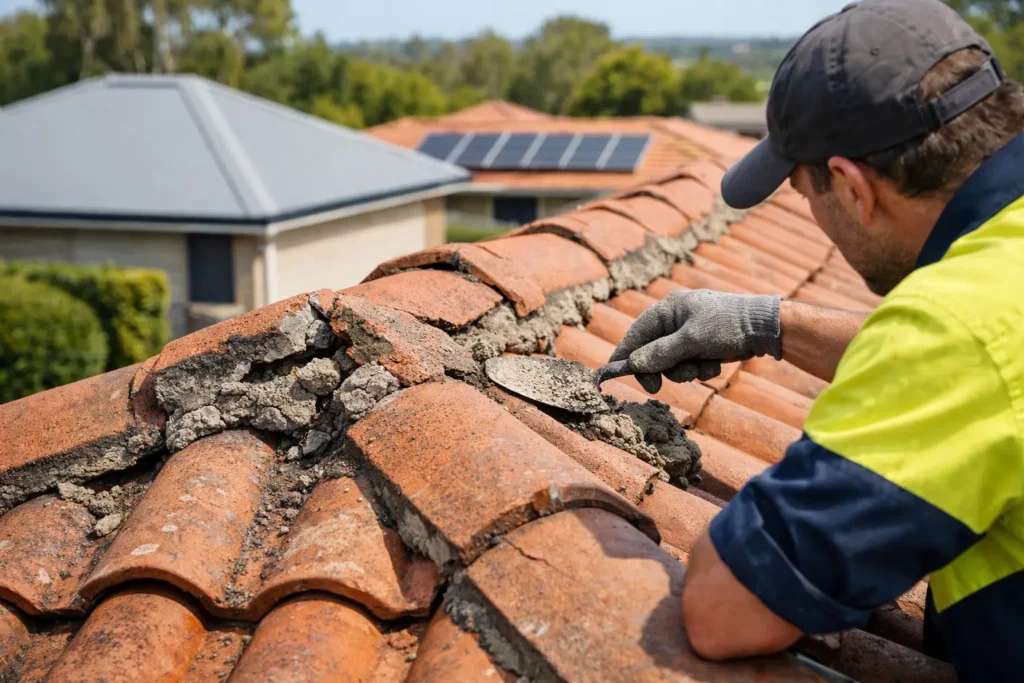
A few loose bits of mortar around the ridge might not look urgent from the ground, but they can be the start of a bigger roofing issue. The question, “when does roof repointing need replacing?”, usually comes up when homeowners notice cracked pointing, water marks inside, or ridge caps that no longer sit firmly in place. Acting early can often prevent a small repair from turning into a leak, damaged ceiling or costly restoration job.
Repointing is not the same as replacing a whole roof. It is a targeted repair to the flexible compound that seals and secures the ridge caps, hip caps and other roof capping tiles. Done properly, it helps keep those tiles stable, weatherproof and looking tidy for years.
What roof repointing actually does
On a tiled roof, the ridge caps are the curved tiles that run along the highest points and angled hips of the roof. They are traditionally held in place by bedding mortar, with a flexible pointing compound applied over the outside edge. The bedding provides the base and the pointing forms the visible, weather-resistant seal.
Flexible pointing is designed to cope with normal roof movement. Sydney roofs deal with harsh sun, heavy rain, wind and changing temperatures, all of which cause tiles and roof structures to expand and contract slightly. Over time, even quality pointing can dry out, crack, lift or lose its bond.
When that seal fails, rain can find its way beneath the capping. It may not cause an obvious ceiling leak straight away, but moisture can affect bedding, sarking and timber components over time. That is why a proper roof inspection is more useful than waiting for a bucket under the leak.
When does roof repointing need replacing rather than patching?
A small isolated crack can sometimes be repaired. If most of the pointing is still flexible, bonded well and in good condition, a local touch-up may be sensible. However, patching is not a long-term answer when the original pointing has reached the end of its serviceable life across large areas of the roof.
Repointing generally needs replacing when cracks are widespread, the compound has become hard and brittle, or it is lifting away from the ridge caps. If the pointing crumbles when touched, has obvious gaps along the edges, or has been repeatedly patched in several places, full repointing of the affected capping is usually the better value option.
The same applies where ridge caps are loose or have moved. New pointing cannot compensate for failed bedding underneath. In that situation, the capping needs to be lifted, the old bedding removed and replaced, then professionally repointed. This is known as re-bedding and repointing, and it gives the ridge caps a sound base again.
Cracks that keep returning
One crack after a storm may be a local issue. Cracks that reopen after being patched can point to movement, deteriorated bedding or old pointing that has lost flexibility throughout the roof. Covering the same problem again and again often wastes money.
A roofer should check whether the ridge cap itself is stable and whether surrounding tiles are sitting correctly. The right repair is based on the condition of the whole capping line, not just the crack you can see from the driveway.
Pointing lifting away from the caps
Pointing should be firmly adhered to the edge of the ridge and hip caps. If it is peeling, separating or falling away in sections, water can enter behind it. This is one of the clearer signs that replacement is needed.
Lifting often occurs on older roofs where the compound has broken down under years of UV exposure. It can also happen after poor previous work, particularly if the surface was not prepared properly or unsuitable materials were used.
Loose ridge caps and failed bedding
Loose capping is more than a cosmetic issue. Ridge caps can shift in high winds, create gaps for water entry and, in severe cases, become a safety concern. If a cap rocks under gentle pressure or sits visibly out of line, the bedding beneath it may have failed.
This job requires more than applying a fresh layer over the top. The cap needs to be reset on new bedding before new flexible pointing is applied. Skipping that step may make it look better briefly, but it will not provide a reliable repair.
Water marks, leaks or damp roof spaces
Not every roof leak comes from ridge capping, but deteriorated pointing is a common place to investigate. Water marks on ceilings near ridge lines, damp insulation, mouldy smells in the roof space or drips during wind-driven rain all deserve a professional inspection.
The visible pointing may be only part of the problem. Broken tiles, cracked flashing, blocked valleys and gutters can also allow water in. A good inspection identifies the actual entry point before work starts, rather than guessing and treating the wrong area.
Age alone is not the deciding factor
There is no fixed calendar date for replacing roof pointing. Its lifespan depends on the quality of the original materials, how well the roof was prepared, exposure to weather and ongoing maintenance. A protected roof in good condition may only need minor attention, while a sun-exposed roof with older mortar can deteriorate much sooner.
Roof cleaning and maintenance also matter. Moss, lichen and built-up debris can hold moisture against tiles and capping. High-pressure cleaning must be handled carefully and followed by a close inspection, because it can reveal weak pointing that was already failing. Cleaning does not cause sound pointing to fail, but it can expose a problem that needed attention anyway.
For homeowners, the practical approach is to inspect the roof after major storms and arrange a professional check if you see cracked capping, loose tiles, debris in valleys or signs of water entry. Preventative repairs are generally far more affordable than repairing internal water damage later.
Repointing versus a full roof restoration
Needing new pointing does not automatically mean your roof needs a full restoration. If the tiles are generally sound and the issue is limited to capping, re-bedding and repointing may be all that is required. This is often a cost-effective way to extend the life of a tiled roof and improve its weather resistance.
A full restoration may make sense if the roof also has widespread cracked tiles, heavy surface deterioration, faded coating, damaged valleys or multiple ongoing leak points. In that case, combining repairs, roof cleaning, repointing and painting can give the roof a more complete result. The right option depends on the roof’s overall condition, not a one-size-fits-all package.
Be cautious of anyone recommending a complete restoration without getting onto the roof and assessing the tiles, bedding, valleys and capping closely. Clear advice should explain what needs doing now, what can wait, and why.
What a proper repointing job should include
Quality repointing starts with preparation. Loose, cracked and failed material needs to be removed, and ridge caps must be checked for movement. Where bedding has deteriorated, the caps should be re-bedded first. The surfaces are then prepared so the new pointing can bond properly.
The pointing should be applied neatly and consistently along the capping edges, with enough coverage to create a durable weather seal without looking bulky or messy. The finished lines should be secure, tidy and matched to the roof where practical.
It is also worth checking nearby problem areas while the work is underway. Broken tiles, valley issues and blocked gutters can undermine an otherwise good roof repair. DJ Roofing & Restoration provides practical roof inspections and straightforward recommendations, so homeowners know whether they need a local repair, re-bedding and repointing, or broader restoration work.
Do not wait for the ceiling to leak
The best time to replace failing roof pointing is before water gets into the roof space. Once you can see a stain on the ceiling, there may already be moisture affecting materials above it. Early repairs protect more than the roof surface – they help protect insulation, plaster, paint and the value of the home.
If your ridge caps look cracked, loose or weathered, get them checked while the repair is still manageable. A clear inspection and an honest quote will tell you whether a simple repair is enough or whether the pointing and bedding need proper replacement.