
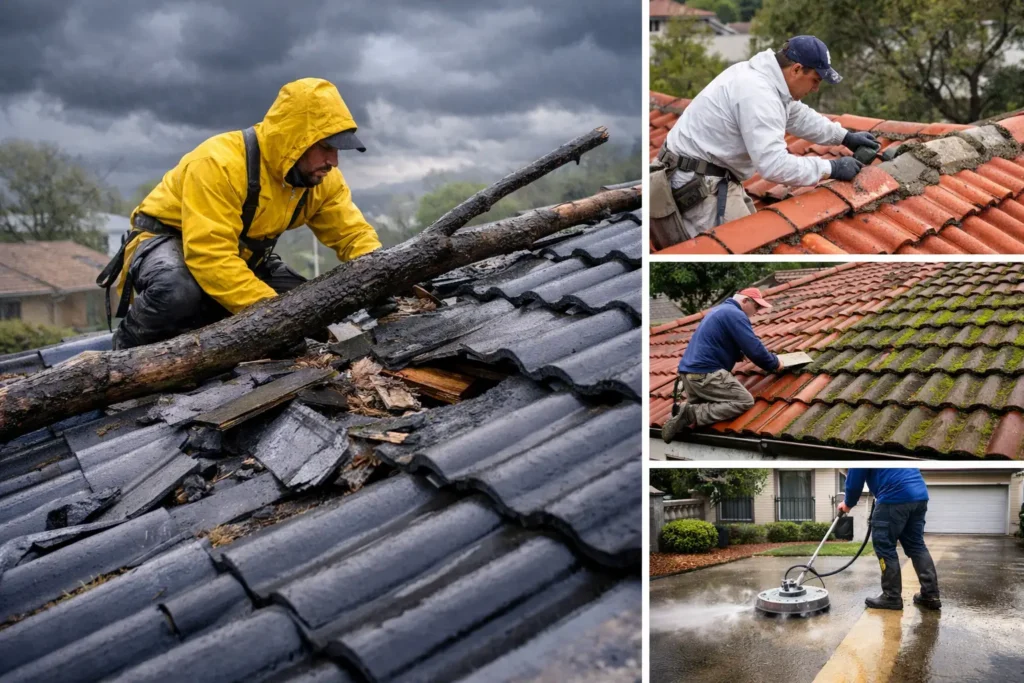
A hard Sydney storm can expose a roof problem that has been building for years. This storm damage roof guide helps you work out what needs urgent attention, what can wait for a proper inspection, and how to protect your home without making the damage worse.
The first rule is simple: do not climb onto the roof during or straight after bad weather. Wet tiles, metal sheets, moss, loose debris and strong wind make roofs dangerous. You can often identify the warning signs from ground level, inside the house, or from an upstairs window. If water is getting in, focus on limiting damage indoors and arrange a professional roof inspection as soon as conditions are safe.
What Storm Damage Looks Like on a Roof
Storm damage is not always a pile of broken tiles in the yard. A few displaced ridge caps, a cracked tile, lifted flashing or blocked valleys can be enough to let water into the roof cavity. By the time a ceiling stain appears, water may have travelled a fair distance from the original entry point.
After heavy rain, wind or hail, look for obvious signs around the property. Broken or slipped roof tiles, metal sheeting that appears lifted, fallen branches, loose guttering and debris on the roof all need attention. Check the ground around the home for tile pieces, screws, flashing, tree limbs and excessive granules or coating material.
Inside, look at ceilings, cornices, walls and around light fittings. Brown marks, bubbling paint, damp plaster, mouldy smells and drips are clear warning signs. If water is coming through a light fitting, turn off power to that area at the switchboard if it is safe to do so, and contact a licensed electrician as well as a roofing professional.
A roof can also be damaged without leaking straight away. Wind can loosen bedding and pointing around ridge caps, create small gaps near valleys, or shift tiles just enough for the next downpour to cause trouble. That is why a post-storm check is worth arranging even when the ceiling still looks dry.
First Steps After a Storm
Your priority is safety, then preventing further internal damage. Move furniture, rugs and valuables away from leaks. Place buckets under drips and use towels to soak up water before it spreads across flooring. If a ceiling is bulging with trapped water, keep people out of the room. A waterlogged ceiling can collapse without much warning.
Take clear photos and videos from safe positions. Photograph ceiling marks, water entry points, damaged gutters, fallen branches and any visible roof damage. This record can help when speaking with your insurer, strata manager or roofing contractor. Do not risk climbing up for a closer photo.
If branches have landed on the roof, stay well clear. A branch may be holding damaged material in place, and pulling it down can cause more breakage. For major structural damage, exposed electrical wiring or a roof that is unsafe to occupy beneath, contact emergency services or the relevant emergency provider first.
For smaller active leaks, temporary protection may be possible from inside the roof space only when it is safe, dry and accessible. In most cases, though, a professional temporary repair is the better option. A tarp thrown over tiles can trap water, blow loose in the next gust, or cause more damage if it is fixed incorrectly.
The Storm Damage Roof Guide: What Needs Urgent Repair?
Not every storm mark means you need a full roof restoration. The right repair depends on the roof material, its age, the location of the damage and whether water has entered the home. A proper inspection separates a local repair from a wider maintenance issue.
Active leaks and damaged valleys
An active leak should be treated as urgent. Common causes include cracked tiles, failed flashing, deteriorated bedding, blocked valleys and rusted metal sections. Roof valleys carry a large volume of rainwater, so even a small hole, split or build-up of leaves can quickly send water under tiles and into the ceiling.
Valley replacement may be needed where old metal is rusted through or badly deteriorated. Simply clearing debris will not fix a valley that has reached the end of its service life. On the other hand, a sound valley with leaves packed into it may only require professional cleaning and a check of the surrounding tiles.
Loose ridge caps, bedding and pointing
Ridge caps are the tiles along the roof ridges and hips. Strong wind can loosen them, especially where older cement bedding has cracked or broken away. Re-bedding and repointing restores the support beneath the ridge caps and seals the edges with a flexible pointing compound.
This work is often more cost-effective than allowing loose ridge caps to become a leak or fall hazard. It also helps secure areas that cop the most wind exposure. The condition of the rest of the roof matters, though. If tiles are brittle or there are widespread issues, repairs should be planned as part of a broader restoration recommendation.
Cracked, broken or displaced tiles
A broken roof tile can look minor from the driveway, but it creates a direct path for water. Tiles can crack from hail, impact from branches, foot traffic or age-related wear. Replacing individual damaged tiles is usually straightforward when matching tiles are available and the surrounding roof is in good condition.
Displaced tiles need attention too. Wind-driven rain can travel uphill and sideways under tiles, particularly on exposed roofs. A roofer should check that tiles are correctly seated, the sarking is not damaged and water has not reached the roof frame or insulation.
Gutters and downpipes under pressure
Gutters are part of your roof drainage system, not an afterthought. Leaves, mud and roof debris can block outlets and cause water to overflow back toward the eaves. In severe cases, overflowing water can damage fascia boards, paintwork and ceilings.
Check for sagging gutters, disconnected downpipes and water pouring over the gutter edge during rain. Gutter cleaning can solve a blockage, but bent brackets, rust holes or poorly directed downpipes may need repair. If your home sits under large trees, regular gutter maintenance before storm season is money well spent.
Why a Roof Inspection Beats Guesswork
Homeowners often see one broken tile and assume that is the full problem. Sometimes it is. More often, the visible damage is only part of the picture. Water can enter at one point and show up inside several metres away, while storm debris can hide damaged valleys, flashing or cracked pointing.
A thorough inspection checks the roof surface, ridge capping, valleys, gutters, flashings and likely water paths. It should lead to a clear explanation of what is damaged, what is preventative maintenance, and what can reasonably wait. You should not be pushed into paying for a complete roof replacement when targeted repairs or restoration work will extend the roof’s life.
At the same time, cheap patch jobs are not always value for money. Applying sealant over cracked materials without fixing the underlying issue may stop a leak briefly, then fail at the next heavy rain event. Good roofing work addresses the cause, not just the stain on the ceiling.
Repairs, Restoration or Replacement?
The best option depends on the overall condition of your roof. A relatively sound tiled roof with storm-related damage may only need tile replacement, valley repairs, gutter cleaning and re-pointing. A faded or weathered roof with multiple minor defects may be a strong candidate for restoration, including repairs, cleaning, preparation and roof painting.
Restoration can improve weather protection, appearance and property value without the cost of full replacement. It is not a cure for a roof with major structural issues, extensive corrosion or materials at the end of their serviceable life. In those cases, replacement may be the more honest long-term option.
Metal, cement tile and terracotta roofs all need different approaches. High-pressure cleaning, for example, must be carried out carefully and only where suitable for the roof condition and material. Poor cleaning methods can dislodge coatings, force water into weak areas or damage older tiles. The inspection should come before any cleaning or painting decision.
Preparing for the Next Storm
The best time to deal with roof maintenance is before water is dripping through the ceiling. Keep gutters and valleys clear, trim back branches that overhang the roof, and have loose ridge capping or cracked tiles repaired promptly. If your roof is older, arrange periodic inspections rather than waiting for the first leak.
Whirlybirds can also help improve roof-space ventilation when correctly selected and installed, though they will not fix a leak or replace damaged insulation. Good ventilation can reduce heat build-up and moisture in some homes, but the roof must be weatherproof first.
If your roof has been through a rough patch of weather, get a straightforward assessment before a small fault turns into damaged ceilings, mould or timber repairs. DJ Roofing & Restoration can inspect the problem, explain the practical options and provide a clear quote for the work that actually needs doing.