
A few cracked tiles can look like a small job from the ground. But once rain is getting into the roof space, the real question is not how many tiles are broken – it is whether the roof can be reliably repaired or whether larger replacement work is the smarter spend. Tile repairs versus replacement is a decision best made from the condition of the whole roof, not just the damage you can see.
For most Sydney homes, targeted repairs are the right first move. A sound tiled roof can last for decades when problems are found early and fixed properly. The costly mistakes happen when homeowners keep patching a roof with widespread age-related damage, or replace far more than necessary because no one has explained the options clearly.
Tile Repairs Versus Replacement: Start With the Cause
A cracked, slipped or missing tile does not always mean the roof is failing. Tiles can break after storm debris, foot traffic, ageing mortar, thermal movement or a poorly placed roof repair. If the surrounding tiles are in good condition and the roof structure is dry, replacing the affected tiles and checking the bedding, pointing and flashings can solve the issue for a sensible cost.
The key is finding out why the tile failed. Water can travel under the tiles before it appears on a ceiling, so the leak inside may not sit directly below the damaged area. A proper inspection looks at the tile itself, the surrounding courses, valleys, ridge capping, penetrations and gutter line. It also checks whether blocked gutters or overflowing valleys are sending water where it should not be.
A repair is usually worthwhile when the damage is localised. That could mean a handful of broken tiles after a storm, loose ridge caps, a damaged valley section or one trouble spot around a vent or chimney. These are common jobs, and when completed properly they can stop a leak without turning a manageable problem into a major project.
When Tile Repairs Make Better Financial Sense
Repairing individual tiles is often the better value option when the roof is otherwise doing its job. A good repair should address more than the visible break. It should restore the water-shedding line of the roof and deal with any loose mortar, failed pointing or debris that contributed to the issue.
Repairs are particularly practical where the roof has:
- isolated cracked, chipped, slipped or missing tiles
- a small number of loose ridge or hip caps
- local damage to flashing or a roof valley
- minor leaks caught before timber or ceiling damage occurs
- solid-looking tiles across the remaining roof area
Matching matters as well. On older cement or terracotta roofs, a replacement tile may not be an exact colour match after years of weathering. That does not automatically make repair the wrong choice. A quality repair can still be neat, secure and weatherproof, and roof cleaning or painting may help improve the overall appearance where suitable for the roof material.
For property investors and owner-occupiers alike, this approach protects the budget. There is no benefit in replacing sound sections of a roof simply because one area needs attention. A straightforward repair, completed before the next heavy downpour, can prevent much more expensive damage to insulation, plasterboard, electrical fittings and timber framing.
Signs Replacement Is the Better Long-Term Call
There comes a point where repeated repairs stop being economical. If a roof has problems across several areas, the cost of call-outs and short-term fixes can add up quickly. More importantly, patching a roof that is broadly deteriorating can leave you exposed to the next leak.
Replacement may be the better option when tiles are becoming brittle or porous across wide sections, break under light pressure, or have reached the end of their useful life. Large-scale cracking, recurring leaks in different areas, deteriorated valleys, extensive ridge capping failure and sagging roof lines all need a closer look. The condition underneath the tiles matters too. If water has damaged battens, sarking or structural timber, replacing tiles alone may not deal with the full problem.
A full roof replacement is a major investment, so it should be based on clear evidence rather than a sales pitch. Ask what is failing now, what can reasonably be repaired, how long that repair is expected to last, and what additional work may be required if the roof is opened up. A dependable contractor should be able to explain the difference in plain language.
Sometimes the best answer sits between a small repair and a complete new roof. Replacing a damaged valley, carrying out extensive re-bedding and repointing, changing failed flashings, repairing selected roof areas and restoring the finish can give an ageing roof more useful life. This can be a very practical option for homeowners who want to improve presentation and weather protection without committing to full replacement before it is necessary.
Do Not Judge the Roof From the Driveway
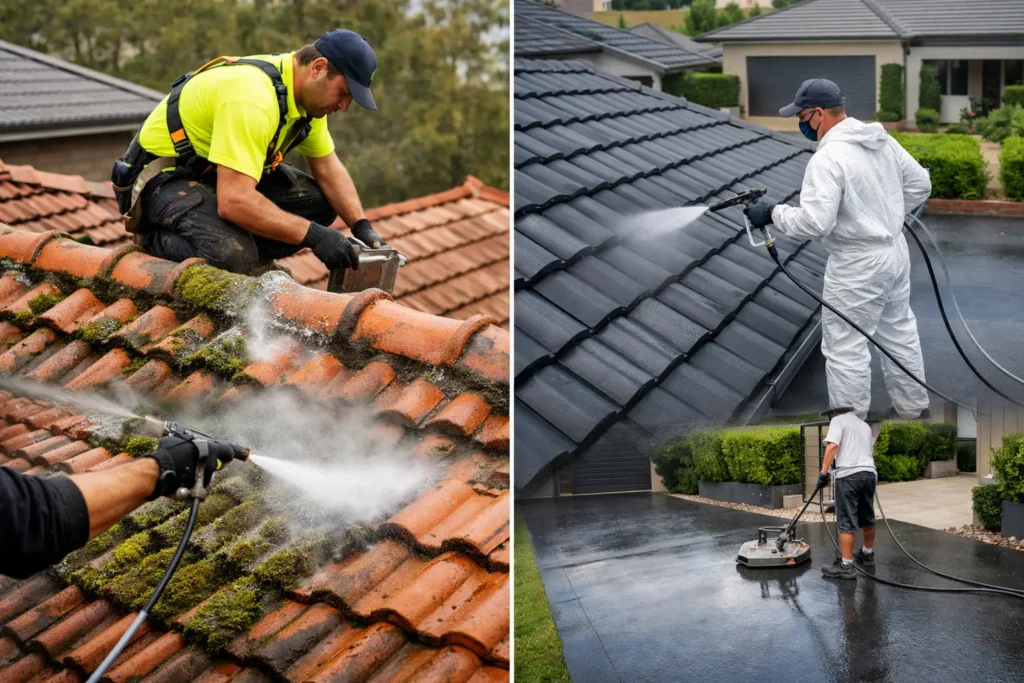
A roof can look tired and still be structurally sound. It can also look reasonable from the street while hiding broken tiles, blocked valleys or deteriorated pointing on the side you cannot see. Moss, lichen and built-up grime may hold moisture against roof surfaces and make an inspection harder, but dirt alone is not a reason to replace a roof.
Likewise, a fresh coat of roof paint is not a cure for water entry. Painting should follow repairs, preparation and cleaning, not cover up unresolved defects. If the roof has cracked tiles, loose caps or leaking valleys, those issues need to be fixed first. Done in the right order, restoration work can lift street appeal and help protect the roof surface. Done in the wrong order, it can waste money.
For Sydney homes, weather exposure also changes the equation. Coastal salt air, strong sun, wind-driven rain and leafy surrounds can each affect roof components differently. A house near mature trees may need more regular gutter and valley cleaning. A more exposed property may see faster wear around ridge capping and flashings. The right recommendation should reflect the roof in front of you, not a one-size-fits-all rule.
Compare the Real Costs, Not Just the Quote Total
The cheapest repair is not always the best value, and the biggest quote is not automatically the most thorough. Compare what each option actually includes. A repair quote should make clear which tiles, caps, valleys or flashings are being worked on and whether the source of the leak has been identified. Replacement pricing should explain the scope of removal, roof preparation, tile installation, associated roof components and site clean-up.
It is also worth considering the cost of waiting. A small roof leak can stay hidden for months, especially during dry weather. By the time staining appears on the ceiling, moisture may already have affected insulation or timber. Acting early gives you more choices. You may be able to repair a local issue before it becomes a wider restoration or replacement job.
A good inspection is valuable because it removes the guesswork. You should not be pressured into replacing a roof that can be repaired properly, and you should not be told a few new tiles will solve a problem that runs deeper. DJ Roofing & Restoration takes a practical approach: assess the condition, explain the options, and recommend the work that gives your home reliable protection for the money you are spending.
If you have noticed a leak, broken tiles, loose ridge capping or water marks inside, arrange an inspection before the next run of wet weather. A clear assessment now can help keep a small roofing issue exactly that.