
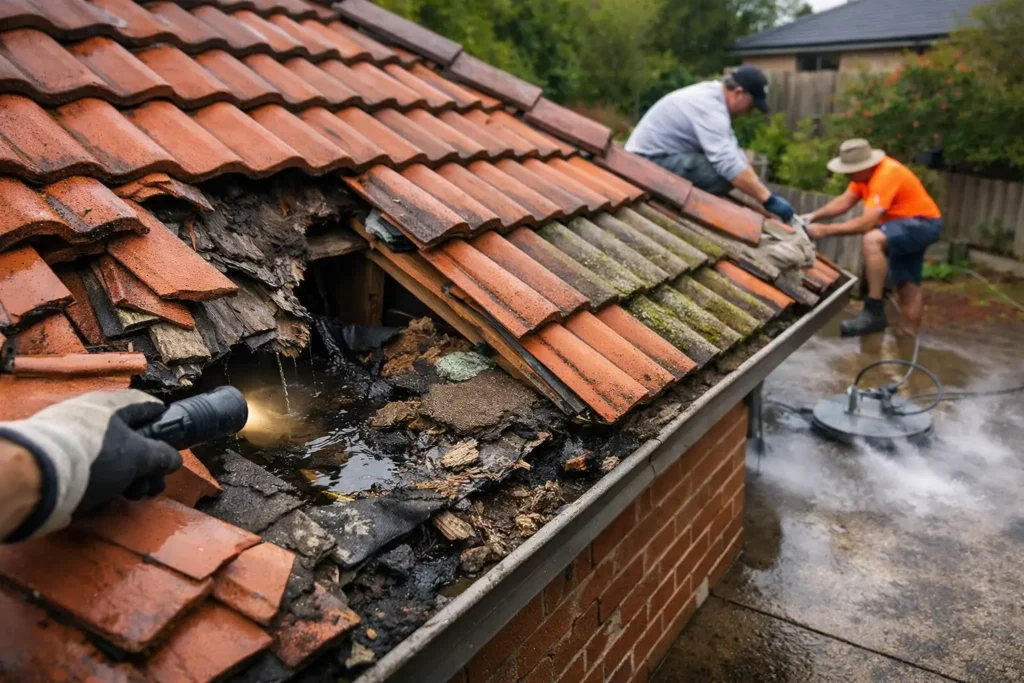
Water dripping from a ceiling is rarely directly below the roof fault. This leaking tile roof example shows how a small issue around a valley can send water under tiles, across roof timbers and into a bedroom metres away from where the rain first got in. That is why guessing at a roof leak can be expensive.
A tiled roof has plenty of overlapping parts designed to shed water. When one part fails, the visible stain inside is only one clue. The job is to trace the water back to its entry point, repair the cause properly and check for related issues before the next heavy Sydney downpour.
A leaking tile roof example from a typical home
Picture a single-storey brick home with an older cement tile roof. The owner noticed a brown mark growing on the cornice in the rear bedroom after several days of steady rain. There were no missing tiles visible from the ground, and the ceiling only dripped during heavier weather. It was tempting to blame one cracked tile above the room.
A close roof inspection found the problem was not above the stain at all. The roof valley, where two roof sections meet, had built up with leaf litter and sediment. Water was backing up during heavy rain, getting beneath the surrounding tiles and running along the sarking and battens. A few cracked tiles near the valley and worn bedding at the ridge made the situation worse, but they were not the main entry point.
This is a common scenario. Tile roofs are durable, but they depend on clear valleys, sound pointing, correctly seated tiles and flashings that direct water where it belongs. A leak can be caused by one defect or several smaller maintenance problems working together.
Why the stain was nowhere near the roof fault
Water follows gravity, but it also follows timber, insulation, sarking and the lowest available path. Once it gets under roof tiles, it may travel a long way before it finds a gap around a light fitting, cornice or ceiling sheet.
That means replacing the tile directly above a wet patch may not stop the leak. In this example, the rear bedroom ceiling was the point where water finally emerged, not the point where it entered. The valley was higher up the roof and offset to one side.
This is also why a roof may leak only in wind-driven rain. A cracked tile can cope with a light shower but allow water in when gusts push rain sideways. Likewise, a partly blocked valley may drain normally in a brief shower but overflow during a sustained storm.
What the inspection found
A proper inspection starts with the roof surface, then looks at the roof space where safe access is available. On this home, the key signs were clear once the valley was cleaned and the nearby tiles were lifted carefully.
The valley had restricted drainage from leaves and roof grit. Its metal surface showed age-related wear, and water marks were visible on the battens beneath adjacent tiles. Several tiles had fine cracks that were hard to spot from the ground. The ridge pointing was also deteriorating in sections, leaving gaps where water and debris could work underneath.
None of these findings automatically means a full roof replacement is needed. That is an important distinction for homeowners. A well-maintained tile roof can often be repaired and restored for far less than replacement. The right recommendation depends on the condition of the tiles, valleys, ridge capping, flashing and underlying structure.
The repair work that solved the problem
For this roof, the repair involved clearing and cleaning the valley, replacing the damaged valley section where required, and fitting replacement tiles that matched the existing profile. Loose or cracked ridge sections were re-bedded where necessary, then repointed to provide a secure, flexible finish.
The surrounding roof was checked for additional cracked tiles and any areas where tiles had slipped out of position. Gutters were cleaned as well, because a blocked gutter can cause overflow that looks similar to a roof leak and can soak fascia boards and eaves.
The ceiling damage inside still needed time to dry before repainting. Repairing a ceiling before the roof is fixed simply hides the evidence and risks doing the same work twice.
Common causes of tile roof leaks
Tile roofs do not usually fail all at once. More often, normal weathering and missed maintenance create weak points over time. The most common causes include cracked or displaced tiles, failing bedding and pointing, blocked gutters or valleys, worn roof valleys, damaged flashing around chimneys and penetrations, and poorly sealed areas around skylights or vents.
Age matters, but maintenance matters just as much. A roof that is cleaned, inspected and repaired as issues appear can keep performing for many years. On the other hand, a small leak left through several wet seasons can damage insulation, timbers, plaster and electrical fittings.
Terracotta and cement tiles have different characteristics, but both need careful handling. Walking in the wrong places can crack tiles. High-pressure cleaning without the right technique can dislodge older pointing or force water into areas it should not reach. This is one reason roof work is best left to experienced tradespeople with the right safety equipment.
When a small repair is enough – and when it is not
If the leak comes from a handful of broken tiles, a local flashing issue or a small section of failed pointing, targeted repairs are often the sensible option. They address the immediate water entry point without spending money on work the roof does not yet need.
However, widespread cracked tiles, badly deteriorated valleys, loose ridge capping across the roof or extensive coating failure can point to a broader restoration. A restoration may include repairs, cleaning, re-bedding and repointing, then painting where suitable. It improves protection and street appeal while helping homeowners avoid premature replacement.
There is no one-size-fits-all answer. A reliable roofer should explain what is urgent, what can be monitored and what work will provide the best value over the life of the roof. Be cautious of anyone who recommends a complete replacement without a clear inspection-based reason, or someone who offers a quick sealant fix for a problem that needs proper tile or valley repairs.
What homeowners should do after spotting a leak
If water is coming through the ceiling, move furniture and electrical items away from the affected area. If the ceiling is sagging or heavily saturated, keep clear of it. Water can pool above plasterboard and cause it to fail without much warning.
Take photos of the stain or drip, including after rain if it is safe to do so. Note whether the leak occurs in light rain, heavy rain or windy conditions. Those details can help narrow down the likely cause. Avoid climbing onto the roof yourself, especially when it is wet. Apart from the fall risk, walking on old tiles can create more damage.
If you can safely see that gutters are overflowing from ground level, arrange gutter cleaning promptly. But do not assume gutters are the only problem. A professional inspection should include valleys, tiles, ridge capping, flashings and the roof space where possible.
Preventing the next leak
The best time to repair a roof is before water reaches the ceiling. Keeping gutters and valleys clear is one of the simplest ways to reduce risk, particularly around homes with mature trees. A periodic roof inspection can identify cracked tiles, deteriorating pointing and worn valleys before they become an urgent call-out.
After major storms, look for obvious signs from the ground: displaced tiles, overflowing gutters, loose ridge pieces or fresh water marks inside. Early action is usually cheaper, cleaner and far less disruptive than dealing with damaged ceilings and mould later.
A roof leak does not always mean your roof is finished. Often, it means one part needs attention before it affects the rest of the home. If you have noticed staining, dripping or a musty smell after rain, get the roof checked properly and get clear advice on the repairs that will stop the water at its source.