
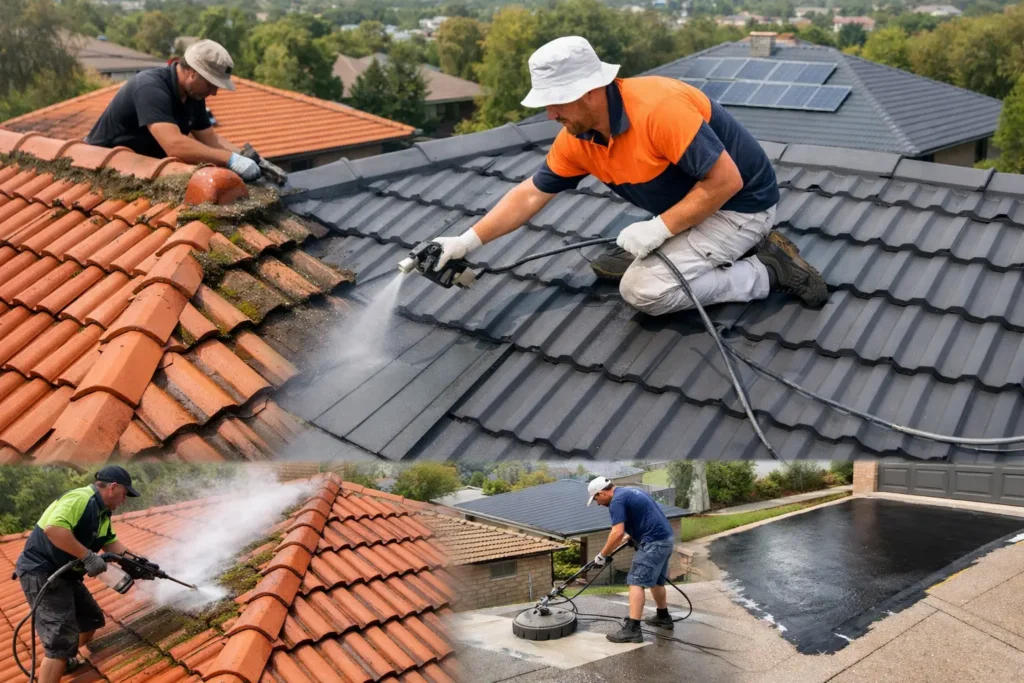
A faded roof can make an otherwise well-kept home look tired, but paint is not a shortcut for roof problems. Before you learn how to repaint a roof, you need to know whether the roof is sound enough to paint in the first place. Cracked tiles, loose ridge caps, rusted metal, blocked gutters and active leaks must be dealt with before any coating goes on.
A properly restored and painted roof improves street appeal, helps protect the roof surface from harsh weather and can delay the cost of a full replacement. A rushed paint job, on the other hand, can trap moisture, peel early and hide faults that turn into expensive water damage later.
Start with a proper roof inspection
The first job is inspecting the whole roof, not just the areas visible from the ground. Check tiles for cracks, chips and movement. On metal roofs, look for corrosion, loose screws, damaged flashings and areas where the existing coating has lifted. Inspect valleys, penetrations around vents, skylights and chimneys, and the condition of the ridge capping.
Inside the roof space, look for staining, damp insulation, mould or daylight coming through. These signs can point to a leak that needs repair before painting starts. It is also worth checking gutters and downpipes. If water cannot drain away properly, it can back up under roof edges and create problems that paint will not fix.
For many Sydney homes, roof restoration work also includes replacing broken tiles, securing loose tiles, repairing valleys and renewing deteriorated bedding or pointing around ridge caps. The exact work depends on the roof type and its condition. There is no value in paying to paint over damage.
Choose the right time and conditions
Roof coatings need dry conditions and enough time to cure. Avoid painting when rain is expected, when the roof is wet from overnight dew, or during extreme heat that causes coatings to dry too quickly. Wind can also make the job difficult by carrying overspray onto windows, cars, neighbouring properties and gardens.
A clear, mild day is generally best. Check the product instructions for temperature and drying requirements, as different primers and roof membranes have specific limits. If the roof is large or weather is unsettled, professional painters can plan the work around suitable conditions and protect surrounding areas properly.
Clean the roof thoroughly before painting
Preparation is where good roof painting is won or lost. The surface must be clean, dry and free from loose material so the coating can bond correctly. Dirt, lichen, moss, salt residue, old flaking paint and chalky surface dust all affect adhesion.
High-pressure roof washing is commonly used on tile and metal roofs, but it must be handled with care. Too much pressure in the wrong spot can damage older tiles, force water into roof spaces or disturb weak mortar and flashings. The water needs to be directed down the roof, not pushed up under tiles or sheets.
Once cleaned, remove loose paint with suitable scraping or preparation methods. Clear debris from valleys and gutters, then allow the roof to dry fully. This is not a step to rush. Applying paint to a damp roof can lead to blistering, peeling and uneven coverage.
Protect the property below
Roof washing and painting can create runoff and overspray. Cover or move outdoor furniture, protect garden areas where practical, and keep cars out of the driveway. Mask solar panels, skylights, walls, fascias and any areas that should not be coated.
This is particularly important on closely spaced Sydney properties. A neat roof restoration should improve the home, not create a clean-up job for the neighbours.
Repair faults before applying roof paint
Once the roof is clean, faults are easier to see. Replace broken or badly worn tiles with matching tiles where possible. Secure loose sheets and replace deteriorated fasteners on metal roofing. Treat rust properly rather than simply coating over it, as corrosion will continue underneath if it is not prepared and sealed.
Ridge caps and roof junctions also need close attention. Loose or cracked mortar can allow water in during heavy rain and strong winds. Repairs should be completed with materials suited to the roof and allowed to cure before coating.
If your roof has recurring leaks, extensive corrosion, sagging sections or widespread tile damage, painting may not be the right first move. In some cases, targeted repair is enough. In others, a larger restoration or replacement will offer better value over the long term. A straightforward inspection helps you spend money where it counts.
How to repaint a roof with the right coating system
Roof paint is not standard exterior wall paint. Use a quality roof coating system designed for the material you are painting, whether it is cement tile, terracotta tile or metal roofing. The system usually includes a suitable primer or sealer followed by roof membrane top coats.
Cement tiles often need a sealer to stabilise the porous surface before top coating. Metal roofs may need rust treatment and a metal-specific primer, particularly where the original finish has worn away. Terracotta roofs require careful product selection because the surface is different again. The wrong coating can fail early, so always match the primer and top coat to the roof material.
Apply the coating evenly, following the manufacturer’s coverage rates and drying times. Two top coats are commonly used to build an even, durable finish. Cutting corners with one thin coat may look acceptable at first, but it rarely provides the coverage or service life homeowners expect.
Spraying can produce a smooth, consistent result on suitable roofs, while brush and roller work is useful around edges, details and smaller areas. Spraying requires experience, correct equipment and strict overspray control. It is not a job for a casual weekend attempt on a steep roof.
Safety matters more than saving a few dollars
Working at height is the biggest risk when repainting a roof. Tiles can crack underfoot, metal can become slippery, and a roof that looks easy from the ground can be dangerous once you are up there. Wet surfaces, steep pitches, powerlines and brittle older materials add to the risk.
Use appropriate access equipment, non-slip footwear, fall protection and safe work practices. Never work alone, and do not attempt roof painting if you are unsure about access or the roof’s condition. Hiring a professional is often more cost-effective than dealing with an injury, damaged tiles or a failed coating job.
A professional roof restoration team can inspect, clean, repair and paint the roof as one coordinated job. That means repairs are not overlooked, coating products are matched correctly, and the finished roof has a consistent appearance from ridge to gutter.
Keep the finish looking good
A newly painted roof still needs basic maintenance. Keep gutters clear, remove overhanging branches where practical, and check the roof after major storms. Leaves and standing debris hold moisture against the roof surface, while blocked gutters can cause water to overflow into areas it should not reach.
A visual check from the ground every few months can help you spot issues early. Watch for lifting paint, new stains, cracked tiles, rust spots or loose ridge capping. Small repairs completed early are usually far more affordable than waiting for a leak to affect ceilings, insulation and internal walls.
If your roof is faded, dirty or showing signs of wear, get it assessed before deciding on paint alone. DJ Roofing & Restoration can provide practical advice on whether your roof needs cleaning, repairs, restoration or a full repaint – so the finished result looks sharp and protects your home properly for years to come.